Are We Really Prepared for the Worst?

July 13, 2011

Guest Blogger Matthew Brentzel takes a look at the capabilities of U.S. Weapons of Mass Destruction (WMD) response teams.

Every so often, I look back on those horrific atrocities committed on September 11, 2001.  I remember being in middle school, where the teachers were reluctant to inform us of what was going on.  I also remember the news stories questioning the capability of our country to deal with such a catastrophe.  Although we are surrounded by fear and uncertainty in trying times, we can always find relief by looking towards the brave men and women that put their lives on the line for the good of our country.

Events like this have occurred before.  I’ve heard stories from my grandparents about Pearl Harbor and the impact it had on history.  We can all agree that these events were truly awful, but we must also accept the fact that we live in troubled times and events like these may be minor compared to the crises that could occur.  Are We Prepared?: Four WMD Crises that could Transform U.S. Security, by the Center for the Study of Weapons of Mass Destruction takes a stab at discussing this heated topic in a serious but effective manner.

I really want to stress “serious, but effective.”  Through a series of four crisis scenarios, Are We Prepared? looks at such issues as nuclear proliferation, the release of chemical weapons, and even a nuclear explosion in a major city.  Perhaps most of us are more inclined to worry about preventing these events rather than preparing to respond to them, but there are times when prevention is not enough and response is necessary.  While reading this book, at first I was taken aback by its willingness to accept the possible losses in one of the scenarios, but this approach enlightens the reader by stressing the high importance of applying appropriate countermeasures. This clear, concise report delves into four different crisis simulations in detail, including preventative measures and how we can be ready to counter such events.  It also goes on to discuss the policy implications of each of these crises for the United States as a whole.

Perhaps the frightening subject matter may prevent some from reading it, but Are We Prepared? documents what we need to do to succeed in the future against an enemy for whom we perhaps can never be fully prepared.  In addition, although at first I was reluctant to believe it, this book helped me realize that we will be able to move on as a nation even though the events it describes could severely alter our future.  The only question is, “Are we prepared?”

If you are interested in politics or international relations, you can find this fascinating book on the US Government Printing Office online bookstore or browse it in a library.


Good Things in Plain Packages

July 8, 2011

Although I generally try to fight the stereotype of Government publications as weighty tomes with austere, distinctly non-decorative covers, I must admit that many worthy documents do come clad in such sober raiment.

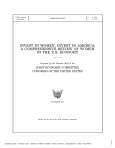
Take, for example, Invest in Women, Invest in America: A Comprehensive Review of Women in the U.S. Economy. This publication of the congressional Joint Economic Committee, like many such documents, presents its material straightforwardly and unadorned except for an assortment of graphs and charts, all in black and white.  But the format is immaterial when matched against the importance of its subject. Indeed, the very sobriety with which the economic progress of American women, or lack thereof, is presented actually increases the credibility of its findings, at least for me.

One important message is that women have made significant economic strides over the last several decades. Yet certain persistent issues documented in this report – the pay gap, under-representation of women in top corporate jobs, and the problems of working mothers – still block the achievement of women’s economic equality.

Of course, the economic downturn of the last few years only serves to emphasize these issues. I was particularly interested in a survey that covered how employers were dealing with this. A surprisingly large percentage of employers said that they were actively helping their employees to cope with the recession and also maintaining flexible employment policies. I was also struck by number showing that without Social Security, far more older women than men would live in poverty.

Although various submissions within Invest in Women, Invest in America suggest possible solutions to the problems of women in our economy, I was most impressed by the depth and quality of the research, without which no really sound solutions are possible. Sober, serious, and detailed, this publication is a valuable resource for studying a complex and long-running social issue. You can read it here or here or get a copy here. It’s also available in libraries.


The Few, the Proud, the Anthology

July 6, 2011

 Book buyers and book hunters (who tend to be one and the same) are funny about bibliographies. Non-fiction books need to have them, they’re great to skim through to locate more books on favorite topics – but they’re not exactly scintillating reading. When I saw that the title of this 2011 Library Journal notable Government document was U.S. Marines in Iraq, 2004-2008: An Anthology and Annotated Bibliography, I had mixed feelings. What percentage was going to be anthology as opposed to bibliography?

It really wasn’t a problem. Most of the book is anthology – and not just selections from the Marine Corps Gazette, although there are some excellent ones from that estimable publication. It also includes articles from such distinctly non-military sources as Vanity Fair and Foreign Affairs, and they’re not always totally favorable. Coverage of controversies such as the killings of civilians at Haditha and blunt discussions of whether the American course of action in Iraq was selfless or madness make this collection a lot more than just a “how-to” guide to irregular warfare or IEDs (improvised explosive devices). The U.S. Marines might not love everything journalists and experts write about them, but they’re willing to address criticism, not just ignore it – and I liked this open-mindedness. As a bonus, each article begins with a striking color photograph of Marines in their varied roles inIraq, from combat to pacification.

The bibliography, as the title says, is annotated, so it’s a handy guide to the mainly periodical literature covering these crucial four years of U.S.intervention in Iraq and undoubtedly will be useful to scholars and soldiers alike. U.S.Marines in Iraq, 2004-2008 is a fine book for readers and bibliography-philes alike. You can find it here or in a library.


There are Tough Rules – and Really Tough Rules

June 30, 2011

Guest blogger Maureen Whelan reminisces about some REALLY rigorous regulations.

The agencies of the U.S. Government issue nearly 8,000 regulations each year, but whenever I hear people talking about tough Government regulations, I think to myself that they don’t know what “tough” really is. When I was in high school, I attended an all-girls parochial school. We had a list of rules and regulations that every student needed to follow to avoid detention. They ranged from clothing restrictions to discipline, conduct, and behavior matters. There were several degrees of punishment for violators, from the two hours after school type to the dreaded, all-day Saturday detention with the School Sisters of Notre Dame. One of my friends once received a Saturday detention on the weekend prior to graduation for speeding around the school campus during our senior motorcade. Even today, I’m sure that she would rather have violated Title 49 of the Code of Federal Regulations   (Transportation, Subpart B 365.201 through 365.205, Motor Carriers of Property or Passengers, process on how to Oppose Requests for Authority)  than  oppose the rulings of our Vice Principal!

Seriously, though, the Code of Federal Regulations (CFR) is definitely the most comprehensive official source for all kinds of proposed and final Government regulations. It’s a great research tool, and there are some really good informational tools at the Office of the Federal Register Web site to help you understand how to use it. I think it’s also an unlikely but important symbol of our democracy, because any concerned citizen can access the rule-making process via the CFR, and that’s what open government is about.

You can browse the CFR here or acquire either single volumes or a subscription here. You can also locate the CFR at a Federal depository library. Best of all, none of these sources will give you detention!


The Buzz on Native Bees

June 29, 2011

I’m second to none in my admiration for the great rhythm and blues singer Lavern Baker. Her hit records, like “Jim Dandy,” “I Cried a Tear,” and “Saved” led to her 1991 induction into the Rock and Roll Hall of Fame. Even the greats can go astray, though. In her 1960 recording of “Bumble Bee,” she sang “You hurt me like a bee/a bumble bee, an evil bumble bee.” Wrong! Bumblebees rarely sting and, as native bees, play a little-known but vital role in pollinating  flowers and crops. In fact, growers of greenhouse tomatoes deliberately establish bumblebee colonies in their facilities for pollination purposes.

Thanks to Bee Basics: An Introduction to our Native Bees, a 2011 Library Journal notable Government document co-produced by the U.S. Department of Agriculture’s U.S. Forest Service and the Pollinator Partnership, I now know that bumblebees and other native bees are responsible for 75 percent of the pollination of flowers and crops in the U.S. Given the many news stories in recent years regarding the mysterious “colony collapse disorder” affecting the non-native honey bee, the value of native bees described in this neat little booklet really “stung” me into a new awareness of these amazing and varied creatures. (By the way, native bees rarely sting, and many of their stings are mild.)

As I learned from Bee Basics, aside from bumblebees, most other species of native bees are solitary. They build nests in the ground, in dead trees and, in the case of a number of parasitic “cuckoo” bees, in the nests of other species. Thousands of species exist, many with very specialized tastes in pollen and nectar, those protein-laced plant products that convinced prehistoric wasps to give up their carnivorous wasp-ness in favor of a vegetarian diet.  The southern blueberry bee pollinates – wait for it – blueberry bushes, while squash bees pollinate cucurbits (pumpkins, squash, and zucchini to me). Competition from honey bees, environmental degradation, and pesticides all are hurting many of these interesting and literally life-giving insects so, to quote Arthur Miller, “attention must be paid” by all of us who benefit so mightily from them.

Bee Basics is written for the layperson, provides a huge amount of biological and ecological information in fewer than 50 pages, and is available here for you to read. You can also find it in a library.

As for Lavern Baker, I bear no hard feelings. I still love her version of “Bumble Bee!”


A Military History Buff’s Delight

June 22, 2011

Every so often I like to delve into the pile of magazines that accumulate here at Government Book Talk world headquarters. It strikes me that some of them would be right at home in the periodicals rack of one of the big chain bookstores. Take the latest issue of Army History, for example. The folks at the Center of Military History do a fine job of producing a military history magazine that combines first-rate design and production values with well-researched yet readable articles on the Army’s history.

The lead article in the spring 2011 issue is “Foraging and Combat Operations at Valley Forge.” The author, Ricardo A. Herrera points out the mythos of Valley Forge – martyred Continental soldiers virtuously starving while the sinful Brits feast and frolic in Philadelphia, and George Washington broods magnificently – has obscured the ongoing combat and reconnaissance patrols and foraging expeditions that kept that same army from disintegrating under the impact of adverse weather and supply conditions. His account of the great Forage of 1778, in which General Nathanael Greene commanded a force of almost 1,500 regulars and additional militia forces on a wide-ranging effort to corral any available supplies from the farms of Pennsylvania and new Jersey and destroy what could not be hauled away – both actions to deprive the British foragers of those same supplies – made me look at the year of Valley Forge in a whole new way.

I was particularly interested in the New Jersey segment of the Great Forage, led by General Anthony Wayne. Far from being “Mad Anthony,” Wayne led a relatively successful effort to seize supplies and spar with enemy forces while keeping a really rash cavalry officer – Casimir Pulaski – from getting himself and his men killed through impetuous charges. Some of the action occurred in a part of the state we drive through every summer on the way to the Jersey shore – the next time I’m in the Evesham/Mount Laurel area, I’ll have to inquire about this campaign.

There’s much more in this issue – an account of the repression of Filipino revolutionaries inSamar during the Philippine Insurrection, as well as several book reviews. At least one of the reviews, on the post-World War II war crimes trial of the German general Albert “Smiling Albert” Kesselring almost had me reaching for my credit card on the spot.

You can read this issue here, get a subscription here, or find issues in a library. Trust me, if you’re a military history scholar or buff, you’ll find something of interest in every issue – I sure do.


Cooking (and Eating) With Uncle Sam

June 20, 2011

 The National Archives  just opened a new exhibit that has piqued my interest. “What’s Cooking, Uncle Sam?” is intended to “explore the records of the National Archives that trace the Government’s effect on what Americans eat.” Although I haven’t had a chance to visit the exhibit yet, it’s been getting great press in the New York Times (subscription required, I’m afraid) and the Washington Post.

Awhile back I discussed one of the Government’s efforts to inform the public about food preparation: Aunt Sammy’s Radio Recipes. In those days, thrifty, filling meals were the order of the day – comfort food that could nourish people struggling through the Great Depression with very little spare cash.The Government is still a player in the food game today, but now the problem seems to be obesity rather than malnutrition. The Department of Agriculture (USDA) has replaced its venerable Food Pyramid with MyPlate, but the aim remains the same: educating the public on portion control and which foods to increase or decrease in the American diet.

This brings me to another 2011 Library Journal notable Government document: the USDA Food and Nutrition Service’s Grow It, Try It, Like It: Preschool Fun with Fruits and Vegetables, a kit aimed at parents and teachers who want to provide young children with food and nutrition information in a fun way while teaching them all kinds of other things, like growing and cooking vegetables. Kids can improve their small motor skills while getting their hands dirty in a constructive way and then serve up the results – and maybe even acquire a taste for fruits and veggies, that perennial hope of parents everywhere. The kit includes seven booklets, with names like “Spinach Lane,” “Sweet Potato Hill,” and “Peach Tree Orchard,” each one explaining a particular fruit or vegetable’s nutritional value, how to grow it, recipes, and lots more. There are plenty of puzzles and other fun activities, too. Since we’re way past Aunt Sammy these days, technologically speaking, the kit also includes a CD-ROM with more information and a DVD of “Cool Puppy Pup’s Picnic and Lunch Parties.”

So what’s cooking at the Federal level? Quite a bit! You can view Grow It, Try It, Like It here or browse through its components in a library. I suspect that even a lot of us who are way past the Cool Puppy Pup stage might learn something from these booklets – I didn’t inherit my grandmother’s green thumb, so maybe they could actually help me grow some of this stuff!


A new history of GPO – hot off the press

June 15, 2011

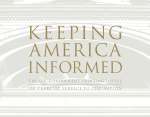
As I mentioned some months ago, 2011 marks the U.S. Government Printing Office’s 150th anniversary. Since no history of the agency has been written since 100 GPO Years in 1961, and a great deal has happened to both GPO and the Nation since then, Keeping America Informed: The U.S. Government Printing Office, 150 Years of Service to the Nation is a welcome addition to a relatively sparse collection of books on the subject. (Full disclosure: I was a member of the editorial group that worked on this book and I wrote several of the sidebars scattered throughout – whew, glad to get that off my chest!)

Perhaps because GPO still is at its original location at the corner of North Capitol and H Streets Northwest, just down the street from the U.S. Capitol, it has a remarkable collection of photographs of its buildings, equipment, and especially people. Those photographs really make this new book something special. It’s impressive and oddly moving to see the printers of a century ago gazing solemnly at the camera, “getting the books out” just as we do here today. For many readers, these images will put a human face on a little-known but vital aspect of the Government.

The text is impressive, too. In the 50 year since the last GPO history was published, a lot has happened. There are triumphs (the transition from hot metal to computer typesetting, the advent of the digital age and the Internet, GPO Access and the Federal Digital System) and frank discussions of controversial matters (the McCarthy era investigations of GPO, the 1968 riots that disrupted nearby neighborhoods). There is also more information on aspects of the more distant past, such as GPO’s reluctant role in Theodore Roosevelt’s abortive attempt to simplify the spelling of words in Government documents – and the editorial cartoonists had just as much fun with it then as they would now!

Since I’ve referenced my own peripheral role, I would be lax if I didn’t mention that George Barnum, GPO’s Historian, and Andy Sherman, our Chief Communications Officer, used both primary and secondary sources to turn what easily could have been a turgid “official history” into a clear, readable narrative. George also did a great job of selecting the photos. One of the book’s key sources was a series of articles diligently researched by Dan MacGilvray, a former GPO Historian. Dean Gardei’s book design skills contributed mightily and GPO craftsmen produced a first-rate final product, as always. To quote Don Ritchie, the Senate Historian, “Congratulations on all this work, it’s a great achievement.” 

Above all, Keeping America Informed does a masterful job of showing how GPO has used the best technology available to ensure the dissemination of Federal Government information to the American people – from the original printings of the Emancipation Proclamation and the UN Charter to online versions of today’s Congressional Record and the Federal Register. You can get a copy here.  It’s also available via GPO’s Federal Digital System here. As to which sidebars I wrote, I’d be interested in your guesses!


The Invaders are Coming – and They’re Green!

June 13, 2011

I have green aliens living in my backyard. They looked so nice when they arrived, but now…I really don’t know what to do. I blame the Government for this – specifically the U.S. Department of Agriculture, Forest Service, Southern Research Station. I was a happy man until I started reading the book they’ve published – A Field Guide for the Identification of Invasive Plants in Southern Forests – and now I’m a guilt-ridden shell.

When I started reading this book, which was named as one of Library Journal’s Notable Government Documents, I nodded knowledgeably as I looked through the beautiful color photographs of invasive trees that increasingly are infesting 13 southern states. Who wouldn’t recognize the ubiquitous Tree-of-Heaven, or ailanthus, which seems to line every roadway where I live in Northern Virginia? Then there’s the tungoil tree, whose name rang a bell because its oil is used as a wood drying and finishing agent. It’s now considered invasive and  is running wild in Louisiana, Mississippi, Alabama, and Georgia.

All very interesting, I thought to myself, as I started paging through the invasive shrubs section. Then it happened. “Sacred Bamboo, Nandina.” What? No! It’s in our back and  front yards! We got it from a friend, and it looks so nice! “Widely planted as an ornamental, now escaped and spreading from around old homes and recent landscape plantings.” Well, maybe there’s an answer; according to the Guide, “Sterile-seeded, reddish cultivars available.”

Shaken, I got into the invasive vines section. English ivy? Uh-oh, we have lots of that, but it was here when we moved in. Vinca (periwinkle)? Oh, great, we planted that ourselves! It was all I could do to finish going through this veritable rogue’s gallery. I may have rushed a little, lest even more aliens catch my eye – I feel bad enough as it is.

Seriously, this is an eye-opening look at how many invasive plants are running rampant though the woodlands of the South and crowding out native species. Since many of them were imported for use as ornamentals, they look great in the photographs, but they literally are a blight on the landscape when they escape into the wild. I’ve had an interest in using native plants in my yard, and this book is really motivating me to do more. Anyone living in the South should be aware of the problem, and this book is an excellent place to start. You can read it here, get a copy here or here, or find it in a library.


Child Abduction: A Family Matter

June 7, 2011

 This one was hard to read – not because of the language, but because of the painful subject matter. The Crime of Family Abduction: a Child’s and Parent’s Perspective, a 2011 Library Journal notable Federal Government document, tackles the astonishing and heartbreaking fact that more than 200,000 children each year are abducted by a family member. This little book from the U.S. Department of Justice’s Office of Juvenile Justice and Delinquency Prevention highlights a little-understood crime – and it is a crime, in all 50 states and theDistrict of Columbia.

I say “little understood” because, despite the fact that this is the predominant form of child abduction, it is too often ignored, as if abduction by a parent is somehow understandable or excusable.  Just how inexcusable it can be was brought home to me by the exquisitely painful first-person stories of abducted children and searching parents. The kids involved lose their families, friends, and homes, sometimes are forced to take on new identities, and live in the frightening shadow of discovery. For those returned to searching parents after years of absence, the reunion can be painful or even terrifying, depending on what the abducting parent has told them. According to the testimony presented in The Crime of Family Abduction, the trauma can last a lifetime.

This heartrending book is packed with information for anyone faced with what must be an excruciating situation. It’s also a somber and moving snapshot of a crime that victimizes those even peripherally involved. It’s not a light read, but it’s an important one. You can find it here or find it in a library.


Fannie and Freddie: Where Do They Go from Here?

June 2, 2011

Like a lot of people, I’ve spent many years not knowing exactly what Fannie Mae and Freddie Mac do. Until the housing meltdown, I would have been hard pressed even to tell you whether they were Federal agencies or not (they’re not – they are government-sponsored enterprises, or GSEs). As is often the case, it takes hard times to focus one’s attention on such things but, according to Fannie Mae, Freddie Mac, and the Federal Role in the Secondary Mortgage Market, a lot of people more knowledgeable than me didn’t know much more – the extent to which Fannie and Freddie’s debt securities and mortgage-backed securities (MBSs) were backed by the Federal Government, for example. Apparently some investors found out when it was too late.

Thanks to this excellent Congressional Budget Office (CBO) publication – one of Library Journal’s Notable Government Documents for 2011 – I now have a better grasp on what these two entities actually do, how they flourished in good times and wilted in the financial crisis of 2008, and where they may need to go from here, which is the crux of the CBO’s analysis. It offers three main scenarios – keeping them as GSEs, making them wholly Federal entities, or totally privatizing them. In explaining all of this, it’s helpful that the report uses boxes to highlight important aspects of its research, since laypersons (me) tend to get lost when exposed to too much financial expertise per square inch.

I also enjoyed finding out about other mortgage systems that might be worth exploring, such as that in Denmark, “where 30-year fixed-rate mortgages have been common…mortgage originators fund an individual mortgage by issuing a matching bond. Danish mortgages have a unique feature that allows borrowers to benefit from unexpected increases or decreases in interest rates. When rates rise, borrowers can repurchase their mortgages for less than the amount of the outstanding principal balance…When rates fall, the borrowers can take advantage of refinancing opportunities. In the Danish system—as in other systems that provide borrowers with options that are costly to lenders—borrowers ultimately pay for those features in the form of higher interest rates or fees up front.”  Interesting, indeed, although I’d be the last one to actually consult on something like this!

Fannie Mae, Freddie Mac, and the Federal Role in the Secondary Mortgage Market seems like a great guide for policy makers and anyone interested in the backwash from the great housing debacle of the past few years. It’s available to read here, you can get a personal copy here, or cozy up with a copy in a library.


The Best Government Publications – 2011 Edition

May 31, 2011

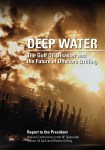
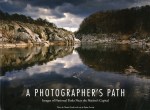
Anyone interested in Government publications should find something of interest in Library Journal’s Notable Government Documents for 2011. It’s sort of the Pulitzer Prize list for the kind of things we like to read around here. For Government Book Talk fans – and I know you’re out there – some of the titles will sound familiar from my past blog posts: Afghanistan: Alone and Unafraid, The Battle Behind Bars, Deep Water, The Financial Inquiry Crisis Report, Memorial Addresses and Other Tributes…in Honor of Edward M. Kennedy, and A Photographer’s Path. I’ll be writing about others, like Bee Basics: an Introduction to Our Native Bees, as soon as I can.

There are also some interesting-sounding state publications in this Notable Documents list, like Palaces on the Prairie, from North Dakota. It focuses on “one of the ways community leaders elevated themselves: constructing palaces decorated with the grains or minerals that would best promote the businesses and products of their towns.” I love quirky-sounding books like this and lament the passing of such architectural gems. But what would you expect from someone who remembers the Flagship restaurant on Route 22 in Union, New Jersey? Yes it was (and is, the last time I heard) a building shaped like ship. Hey, I can’t help liking such things; I’m from the Garden State!

But I digress. The Notable Docs list also features international publications, like the World Atlas of Mangroves and Gender, Women, and the Tobacco Epidemic. I’d love to get into all of these here, but I have enough on my hands trying to cover the Federal part of the publishing spectrum!

Some of the publications are free, some cost money, and many are on line, but they all sound worthwhile. Notable Government Documents for 2011 is a great place to find some of the best publications the public sector has to offer.

.