Vote for the top Government news story of 2011

December 26, 2011

2011 was a momentous year in Federal Government-related news and as such, it was a banner year for important Government publications, as demonstrated by our 2011 Year in Review collection available from the U.S. Government Printing Office (GPO).

But which Government news story was the most significant, in your opinion? Vote in our poll below, and then see the publications that follow that relate to these important stories:

Note 1:As of January 27, 2012, this poll is NOW CLOSED with the final results showing above, but feel free to click on the SHARE THIS link to pass on the results to others.
Note 2: This is a non-scientific user poll. Results are not statistically valid and cannot be assumed to reflect the views of the Government Printing Office customer as a group or the general population.

Following are the Federal Government publications that relate to each of these important 2011 stories:

2011 News Story   Related Federal Publication(s)
9/11 tenth anniversary   Ten years have passed since that tragic day, but the memories are still strong. 2011 saw some excellent publications about that day, including a 10th anniversary edition of Pentagon 9/11 and a reprinting of the 9/11 Commission Report, all of which you can find in our 9/11 Collection: A Decade of Remembrance.

Assassination of Osama bin Laden  FBI Terrorism Research and Analysis Project (TRAP) A Navy SEALS team located and killed Osama bin Laden this year, the mastermind behind the 9/11 attacks and many other Al Qaeda and insurgent terrorist attacks. This 2011 publication, Terrorism Research and Analysis Project (TRAP): A Collection of Research Ideas, Thoughts, and Perspectives, V. 1analyzes causes and possible responses to terrorism as presented at the FBI Terrorism Research and Analysis Project (TRAP) Symposium of international academics and law enforcement personnel.

Death of North Korea’s Kim Jong Il   The recent death of North Korea’s leader, Kim Jong Il, marks an uncertain time for the Korean Peninsula and the entire region. North Korea: A Country Studyreviews the history and the dominant social, political, economic, and military aspects of contemporary North Korea before this.

Deep Water BP Gulf oil disaster report  Deep Water: The Gulf Oil Disaster and the Future of Offshore Drilling, Report to the President, January 2011 In January of this year, the National Commission on the BP (British Petroleum) Deep Water Horizon Oil Spill and Offshore Drilling released its controversial Deep Water: The Gulf Oil Disaster and the Future of Offshore Drilling, Report to the President, January 2011. This best-selling publication offers the fullest account available of what happened in the Gulf of Mexico on April 20, 2010 and why, and proposes actions, changes in company behavior, reform of government oversight, and investments in research and technology that will be required to avert future disasters.

End of the war in Iraq  Battleground Iraq: Journal of a Company Commander There is an interesting White House timeline about the Iraq war at the end of which is a link to the Joining Forces initiative with which one can express one’s support for the troops. GPO’s bookstore has a number of books about Iraq, but two stand out as best-sellers. Battleground Iraq: Journal of a Company Commander gives a realistic account by Major Todd Brown of his experiences as a U.S. Army company commander in Iraq from April 2003 to March 2004. Hard Lessons: The Iraq Reconstruction Experienceexamines the Iraq reconstruction experience, and provides 13 take-away lessons for future contingency relief and reconstruction operations.

  • Buy them in our online bookstore:

a)      Battleground Iraq: Journal of a Company Commander

b)      Hard Lessons: The Iraq Reconstruction Experience

Japan earthquake and tsunami  Field Operations Guide for Foreign Disaster Assessment and Response Natural disasters were big in the news this year, and the Federal Government was involved in responding to them, from the National Guard in the U.S. to foreign response teams overseas. For example, in response to the tragic earthquake and resulting tsunami and nuclear reactor problems in Japan, the U.S. Agency for International Development (USAID), deployed a Disaster Assistance Response Team (DART) that included disaster response experts, urban search and rescue teams, and nuclear experts from the U.S. Department of Energy, Department of Health and Human Services, and the Nuclear Regulatory Commission. The Field Operations Guide for Disaster Assessment and Responseis used by USAID’s Office of U.S. Foreign Disaster Assistance (OFDA) for DART teams and other disaster assistance personnel when responding to foreign disasters like the Japan situation.

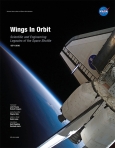
Last Space Shuttle flight  NASA and Space Shuttle publications including "Wings-in-Orbit" 2011 marked the end of NASA’s three-decade long space shuttle program when, on July 21, the final space shuttle mission ended with the shuttle Atlantis rolling to a stop at its home port, NASA’s Kennedy Space Center in Florida. NASA has published a number of terrific books about the program which you can find in our NASA and Space Shuttle Publications, along with a new set of beautiful color bookmarks, one for each shuttle and the best-selling Wings in Orbitbook.

U.S. economy and the Federal budget  Books about Government and Politics, including the Federal Budget and the Economy It seems every newscast this year has covered the US economy, Federal Government budgets and deficits and differing opinions about options to address them. You can find the President’s original budget submission published this year and subsequent analyses and responses to it in our collection of Books about the Government and Politics, including the Federal Budget and the Economy.

How can you find even more Federal Government publications? We have assembled many collections of Federal publications on our year-round Gift Guide and in our Special Collections page on GPO’s online bookstore.

About the Author: Michele Bartram is Promotions Manager for GPO’s Publication and Information Sales Division and is responsible for online and offline marketing of the US Government Online Bookstore (Bookstore.GPO.Gov) and promoting Federal government content to the public. 


Steve Jobs and our Innovation Nation

October 11, 2011

Last week we lost one of America’s great geniuses of innovation, Apple’s founder and CEO, Steve Jobs.

I can remember each time I first used one of Apple’s products. While working for IBM as a systems engineer right out of college and working with both mainframe systems and some not-always-so-friendly early PC operating systems (remember DOS?), I got to use a friend’s Macintosh and was blown away by how easy it was to use. Fast forward through the introduction of the iPod; iTunes online music and apps store; the iPhone—the first touchscreen smartphone; and now the iPad, first touchscreen tablet; and we now have a world that couldn’t conceive of life without Steve Jobs’ innovations.

One of Jobs’ secret to success was treating Apple as an idea and business incubator to continually research and fund what could possibly be the “next great thing” in the future, but was still only a germ of an idea from some engineer or scientist.

The Federal Government as an Incubator of Innovation

Like Apple, one of the key roles of the US Federal Government is to serve as an incubator of innovation.

Here at GPO, for example, we are embracing innovation by producing eBooks, digital downloads, information portals and databases in response to the changing needs of our increasingly digital society, which have been driven in part by Apple inventions introduced by Steve Jobs.

Most of the work products from the Federal Government can be and are used freely by private industry or other areas of Government to spur their own innovations. From statistics to research, processes to products, the Government has provided the seeds to innovation for American industry throughout the years.

Looking through our recent catalog on the US Government Bookstore website, I came across these publications which provide examples of innovation both within the Federal Government and in partnership with the private sector:

 
  • Spinoff Innovative Partnerships Program 2009, provides an in-depth look at how NASA’s initiatives in aeronautics and space exploration have resulted in beneficial commercial technologies in the fields of health and medicine, transportation, public safety, consumer goods, environmental protection, computer technology and industrial productivity.  Some innovation spinoffs over the years include:
    • lightweight breathing system adapted for firefighters;
    • Teflon-coated fiberglass fabric for astronaut spacesuits is now used as a permanent roofing material for buildings and stadiums;
    • remote-controlled robotic arms are now being used for robotic surgical operations; and
    • artificial heart pump based on the design of NASA’s space shuttle main engine fuel pumps.
    • You can get a print copy of this book now at the US Government Bookstore or find it in a library.


About the Author:  I am Michele Bartram, Promotions Manager for GPO’s Publication and Information Sales Division.  My duties include marketing for the US Government Online Bookstore (Bookstore.gpo.gov) and promoting Federal government content to the public. Due to the retirement of Jim Cameron, my duties now also include taking the helm as Blogger for Government Book Talk. I have been in the Internet marketing and ecommerce field for over 15 years.

We at GPO wish Jim all the best in his retirement, and will continue to do our best to spotlight the amazing variety of Government publications and their impact on ourselves and our world – and have fun while doing it.


Space Exploration and the Mind

September 13, 2011

Many years ago I read “Ideas Die Hard,” a memorable story (at least to me) by Isaac Asimov. In the story, a crew of astronauts is on a flight to the moon under very tense circumstances. They go too far and see the dark side of the moon. SPOILER AHEAD: When they view the dark side, it’s a gigantic wood-and-paper stage set, the sight of which causes the crew to have a collective mental breakdown. At the end of the story, it’s revealed that the flight was a simulation and the simulator went just a bit further than intended. I think the story has stayed with me because it addresses the psychological dimensions of space exploration – an aspect I haven’t really seen addressed in news accounts or books.

NASA has filled this gap quite nicely with Psychology of Space Exploration, an engrossing new collection of articles on this theme. After an initial focus on the psychological effects of space travel, for many years the American space program paid only minimal attention to them, perhaps because the military background of the astronauts militated against what they perceived as the possibly career-retarding discussions of such matters. Interestingly, theSoviet Union paid much more attention to the psychological health of its cosmonauts during the same period. These days, however, NASA is more cognizant of the importance of mood, morale, the psychological effects of weightlessness, and other mind-body issues.

As a history buff, I was intrigued to read about the comparison of voyages in space to the epic journeys of Arctic explorers in the late 19th and early 20th centuries. Even now, wintering over in Antarctica is a kind of model of the prolonged stays in close quarters that characterize the International Space Station.

In a section on the interplay of astronauts from different countries working together, I was amused to learn that Soviet cosmonauts were not totally enthralled the space cuisine enjoyed by a French counterpart: “one of them later expressed his relief at going back to black bread and borscht after a menu of canned French delicacies, including compote of pigeon with dates and dried raisins, duck with artichokes, boeuf bourguignon, and more.”

Another fascinating essay described a space flight simulation experience in which people who knew that they were not really in space still got great enjoyment from their “trip.” It sounded so interesting that I was ready to sign up myself. Also, the special effects sound much better than those in Isaac Asimov’s story!

I really enjoyed reading Psychology of Space Exploration – I had no idea of the range of psychological issues that can crop up in space travel and the ways in which NASA has tackled them. Space buffs and students of the human mind will find much to ponder in this book. You can read it here, get your own copy, or find it in a library.


Wings in Orbit: An Interview, Part II

July 28, 2011

On Tuesday, we posted the first of a two-part interview about Wings in Orbit: Scientific and Engineering Legacies of the Space Shuttle, 1971-2010, a new book published by NASA to mark the ending of the U.S. Space Shuttle Program. Here’s Part 2 of that interview with Robert Crippen, the pilot of the Space Shuttle Columbia’s first orbital flight into space, Dr. Helen Lane, Editor-in Chief of Wings in Orbit, Wayne Hale, Executive Editor, and Dr. Kamlesh Lulla, Co-Editor.

 GovBookTalk: Wings in Orbit is beautifully illustrated. Do you have a favorite photograph or other image?

 Bob Crippen: My favorite is the cover shot of the Orbiter in space.

 Helen Lane: Every person involved with this book has a favorite, so there are at least 300 favorites, depending on who you asked.  I was so involved with each graphic that it is impossible to decide.  One of the privileges of working for NASA is the wonderful images and our graphic artists.  We had two outstanding artists to provide these images.

However, I am partial to the first protein crystal, shown on page 433, and the flight of the 747 carrying the orbiter over the desert, page 109. The photos of preparing the Space Shuttle for flight at the Kennedy Space Center are fantastic, but because we had to reduce the size, we did not get the full benefit.  All the photos and many of the graphics are available online through the Johnson Space Center or Kennedy Space Center.

Kamlesh Lulla: In my view, the Space Shuttle provided the scientific community with stunning views of our own home planet. It captured both the natural beauty and human drama: the book contains examples of both. My favorite image in the book is oil fires inKuwait, imaged by the Shuttle crew during a 1991 flight.

Wayne Hale: I particularly like the one of the Shuttle silhouetted against the sunrise colors of the atmosphere.  But there are so many beautiful illustrations, it is hard to pick out just one.

GovBookTalk: From your perspective, how has the Shuttle program advanced space exploration and how will that be reflected in NASA’s future endeavors?

Bob Crippen: It has shown we can operate on a frequent basis of sending crews in space, but more important it has shown the broad range of tasks that humans can accomplish in space.  That knowledge will be invaluable in planning our next major goal in human space flight.

Helen Lane: The focus of the book was the legacy of the Space Shuttle – what would it be remembered for in 10 years.  So much as been made of its failures that we wanted to explore its accomplishments, unlike most of the popular writings.  It is a complex story.  However, I think there are several aspects that changed human space flight forever, and maybe international relationships.

The Orbiters can easily take six and sometimes more people into space.  The Shuttle began when theU.S.was opening up technical jobs to women and minorities.  The Space Shuttle provided the golden opportunity to expand the astronaut core to these folks, plus a wide variety of careers from physicist to astronomer to medical doctors.  No other nation has done that.  Now, it is totally accepted that anyone with the talents, health, and desire can go into space – see the commercial space programs.

The Space Shuttle era moved from the competition (Space Race) between countries to collaborations.  As astronaut Mike Foale (p. 144) said, “When we look back 50 years to this time, we won’t remember the experiments that were performed, we won’t remember the assembly that was done.  What we will know was the countries came together to do the first joint international project, and we will know that that was the seed that started us off to the moon and Mars.”  There were many countries, including our former enemies,Russia and Japan, along with the Europeans involved in the space shuttle.  We flew folks of many nationalities, religions, and cultures.

Many today say it is the Hubble.  The Space Shuttle enabled the Hubble Space Telescope to perform well, leading to major discoveries.  However, through our work with Hubble, we learned to do big construction and repair projects in space.  The Space Shuttle taught us that the human is extremely capable of completing complex tasks in space.  Now, it is accepted that we can do this, but 30 years ago most thought that it was only the dreams of the science fiction writers.

The human, plant, and animal research provides the bases for belief that humans can survive long space flights, probably leading to long-duration stays, including growing their own food.  However, the research provided a warning too – from changes in space craft components, e.g. atomic oxygen, along with orbital debris and radiation, much of which we learned from entering space 135 times.

Finally, 135 re-entries taught us a lot about high attitude hypersonic flight, a must to enable  complex vehicles to come back to earth, manned or unmanned. Prior to the Shuttle program, there were calculations that provided models.  Now, we have real data to use for future modeling of space craft re-entry back to Earth.

Kamlesh Lulla: I agree with Helen. In addition, it is important to remember that each Shuttle mission was a mission to planet Earth. It was both a scientific laboratory and an in-orbit classroom for researchers and educators around the globe.

Wayne Hale: The Shuttle was envisaged as merely one part of a space infrastructure that would eventually lead to missions to myriad places in the solar system.  Since the Nation decided not to invest in the infrastructure to go farther, we learned the most we could from the shuttle; how to operate in space with large teams of people; how to fly safely through planetary atmospheres on the way to and from space.  These are all valuable lessons which will allow future endeavors in space to be successful.

GovBookTalk:  Now that the book is done, what are your feelings about it – and about the Space Shuttle program as well?

Bob Crippen: I am very proud of the book and the Space Shuttle program.  Both are major accomplishments and everyone involved can be proud of the results.

Helen Lane: As with most of the folks that worked in the Space Shuttle program, it is a bittersweet ending – the ending of the longest human space program using these vehicles over and over again in the extremely dangerous environments of space. So I am both sad and proud of working for NASA.

Wayne Hale: It was a privilege to be a part of history; to be a team member trying to do something difficult – nearly impossible – and extraordinarily valuable in the largest sense of the word; historic.  I feel nothing but pride and a sense of gratitude for being part of it.

Kamlesh Lulla: I believe new opportunities will emerge as this era comes to an end. We will continue our journey!

To browse a copy of Wings in Orbit online, click here: http://books.google.com/books?id=aEZo8dHqJbIC&printsec=frontcover&dq=wings+in+orbit&hl=en&ei=kOYeTs3ABYrV0QHi4PDXAw&sa=X&oi=book_result&ct=result&resnum=1&ved=0CDAQ6AEwAA#v=onepage&q&f=false

To purchase a print copy, click here: http://bookstore.gpo.gov/collections/wings.jsp

To purchase Wings in Orbit as an eBook, click here: http://books.google.com/ebooks?id=aEZo8dHqJbIC&dq=wings%20in%20orbit&as_brr=5&source=webstore_bookcard

To find it in a library, click here: http://www.worldcat.org/search?qt=worldcat_org_all&q=wings+in+orbit


Wings in Orbit: An Interview, Part I

July 26, 2011

 A few weeks ago, I blogged about Wings in Orbit: Scientific and Engineering Legacies of the Space Shuttle, 1971-2010, a new book published by NASA to mark the ending of the U.S. Space Shuttle Program. Wings in Orbit authoritatively documents the many accomplishments of the Space Shuttle program from its origins to the present. Beginning with a Foreword by astronauts John Young and Robert Crippen, this compelling book provides clear, accurate, and authentic accounts from NASA’s best subject matter experts, including aerospace engineers who worked with the shuttle program, and leading experts from the science and academic communities. The book captures the passion of those who devoted their energies to the program’s success for more than three decades. It focuses on their science and engineering accomplishments, the rich history of the program, and the shuttle as an icon in U.S. history.

In a first for Government Book Talk, we’ve  interviewed some key players in the development of Wings in Orbit. It’s an honor to welcome Robert Crippen, the pilot of the Space Shuttle Columbia’s first orbital flight into space, Dr. Helen Lane, Editor-in Chief of Wings in Orbit, Wayne Hale, Executive Editor, and Dr. Kamlesh Lulla, Co-Editor, for the first of a two-part discussion about this outstsanding new NASA book.

GovBookTalk: Given the immensity of the Space Shuttle program, it must have been challenging to select the topics for Wings in Orbit, and the authors to write about them. How did you go about that?

Bob Crippen: The intent was to try and capture the legacy of the Shuttle program, the good and the bad.  That helped focus the type of subjects to include.   We wanted to provide data that would help designers of future space craft.  Also it was important to capture the educational aspects of the program because that is a fundamental objective of NASA to stimulate young people to become interested in science and math.

Helen Lane: It was very difficult to determine the material to include, and that took over a year.  We used the definition —  must be an accomplishment that is used in other space programs or on Earth.  Second, we wanted a book of less than 700 pages so we knew we could not cover it all.  With the help of an extraordinary editorial board and interviews from leaders in the Space Shuttle program, we worked with all the NASA centers to finalize the work to be discussed. 

Once we knew the topics, we went to the engineers and scientists that did the work including those that were retired or worked in academia or industry. The contributors were volunteers.  They worked on the book because of their dedication to the Space Shuttle and the desire to let the public understand this program within the context of the accomplishments.  Once we got started, as you can see from the number of authors, we got great participation.

Kamlesh Lulla: The focus of this book is scientific and engineering accomplishments from the Space Shuttle program. This clarity of focus helped us organize the contents.

Wayne Hale: Selecting topics was not hard; eliminating topics and holding writers to a specific page count, that was hard.  Once we outlined the book — about 1/3 on the Shuttle system and how it operates, about 1/3 on the scientific achievements of the shuttle and its payloads, and 1/3 on all the rest, history, society, etc., the community poured out with suggested topics and articles.  It was an overwhelming flood.  Our editors and their staff had to work day and night to reign in the various authors.  The engineers, scientists, and managers associated with the space shuttle over thirty years were yearning to tell the story from their perspective.  Unfortunately we were not writing a set of encyclopedia volumes and were limited to just one book.  So it was a constant tugging match over what got in and what was left out.  I wish somebody would publish the Encyclopedia of the Shuttle because there is enough material out there.  Unfortunately, the magnificent team that was in place during the years of development of the Wings in Orbit book have largely dispersed and getting the people back together to write that encyclopedia would be nearly impossible.

GovBookTalk: The Space Shuttle has a place in our culture as well as in science and technology. For example, I was surprised to find out that both Rush and Judy Collins have written songs about the Shuttle. Did you run across some things along those lines that surprised you?

Helen Lane: We at NASA are probably more aware of the cultural aspects as we have movie companies, TV companies, artists, and musicians that regularly visit along with most sports teams.  Our problem was what to include in this book.

Kamlesh Lulla: I was surprised at the depth of influence Space Shuttle has on our cultural landscape: schools have been named after shuttle astronauts, Girl/Boy Scout local logos have used shuttle; the list goes on and on.

Wayne Hale: The poets, songwriters, movie script writers, and other interpreters of the shuttle really did surprise us.  I am constantly amazed at the outpouring of creative artistic work that surrounds a technological achievement like the Shuttle.  As engineers, we are trained to be “tight-lipped and technical” or as a former administrator once said “I’ll have feelings when I’m dead”.  The impact to society has been anything but tight lipped.  Spaceflight inspires the romantics and the dreamers; always has and always will.

GovBookTalk: One of the most interesting aspects of the book is the number of scientific and technical discoveries made as spin offs from the Shuttle program. Could you tell us about some of those?

Bob Crippen: I believe the book captures a large number of spin offs, an important element of the program.  This provides the public some more concrete results of the program.

Helen Lane: There are hundreds of spin offs.  NASA defines spin offs as technologies that can be patented and then licensed to commercial companies.  There is a Web site that provides the some details: http://www.sti.nasa.gov/tto/shuttle.htm  We chose examples to cover the gamut from health care to industrial applications.  This web site also highlights some of the sciences, such as the discussion on pages 421-429 on the bioreactor. 

GovBookTalk: Were there questions as to how to handle the story of the Shuttle accidents?

Bob Crippen: The two terrible accidents were an important part of the program.  We wanted to tell the story accurately to minimize the probability of future accidents.

Helen Lane: Yes, there was a lot of discussion on how to handle the accidents.  The author, Randy Stone, was a flight director during both accidents.  He tells the story as honestly as he could, but at the same time tried to transmit the emotions of the workers at the agency.  It was felt very hard, and he tried to give the reader a feel for that.  We wanted to have enough technical details for the reader, but not overwhelm them.  The crews’ story was discussed with the goal of a very dignified accounting of their deaths.

Wayne Hale: From the outset we promised ourselves that we would tell the truth and examine the bad as well as the good.  Randy Stone did a magnificent job of covering those complex events in a chapter that I wish could have been much longer.  We always learn more from our mistakes and failures than from our successes.  The genius of American creativity is that failure does not stop us but spurs us on to achieve even greater things.

GovBookTalk: The authors obviously interviewed quite a few people. Did they have any particularly memorable conversations with former astronauts or other well-known figures in the space program?

Helen Lane: Yes, we had the opportunity to interview the original engineers and leaders that built the Space Shuttle, including Bill Lucas (former director of  from Marshall Space Flight Center, Bob Thompson (first program manager), Chris Kraft ( founder of Mission Control as well as major leader), Aaron Cohen (former director of Johnson Space Center and directly involved with the orbiter, esp. the thermal protection system), and R.J Thompson, major manager of building the Shuttle main engines.  I was thrilled to be able to talk with them and hear their insights. They provided much of the wisdom and direction for the topics to include in the book. Much of their experiences are recorded on the NASA oral history, available online.  

Kamlesh Lulla: These interviews enriched the contents of the book. Their insights were very valuable in compiling the contents.

Wayne Hale: There were so many and almost every one was memorable; it would be really hard to pick out the top.  I was particularly impressed by the scientists and their discussions of the achievements of the experiments carried by the Shuttle.  As a Flight Director, we were always working on the next flight and rarely had time to look back and read the papers from those experiments which were often published months later.  There was far more in those scientific results than I realized. [End of Part 1]

Look for Part 2 of the interview later this week!

To browse a copy of Wings in Orbit online, click here: http://books.google.com/books?id=aEZo8dHqJbIC&printsec=frontcover&dq=wings+in+orbit&hl=en&ei=kOYeTs3ABYrV0QHi4PDXAw&sa=X&oi=book_result&ct=result&resnum=1&ved=0CDAQ6AEwAA#v=onepage&q&f=false

To purchase a print copy, click here: http://bookstore.gpo.gov/collections/wings.jsp

To purchase Wings in Orbit as an eBook, click here: http://books.google.com/ebooks?id=aEZo8dHqJbIC&dq=wings%20in%20orbit&as_brr=5&source=webstore_bookcard

To find it in a library, click here: http://www.worldcat.org/search?qt=worldcat_org_all&q=wings+in+orbit


The Great Beyond…On Earth?

July 20, 2011

Guest blogger Camille Turner takes a look at where our universe has come from and where it is going.

I think like many members of my generation, my interest in space sparked with  Steven Speilberg’s E.T. – The Extra-Terrestrial, and then there was no looking back. Cosmos and Culture: Cultural Evolution in a Cosmic Context from the NASA History Series maintains a lot of those same wonderful aspects as a Spielberg flick; it’s enjoyable, it defines itself through the particulars of science and the unknown, and it creates a universal appeal by tapping into the bigger questions of how culture itself has evolved to what it is today.

One of the really amazing aspects to this book is that it isn’t just an exploration of space: experts from an array of fields including science, history and anthropology, all explore culture in the context of the cosmos. By investigating a set of recurring principles, particularly evolution, the authors of each section relate a principle to the expansion of the cosmos, in such a way that makes perfect sense.

For instance, when evolution was first established as a concept, it was considered blasphemous. Now, it is not only accepted in every arena of science; it is a symbol of cultural values, as can be seen by the fish on the back of cars containing the word “Darwin” and occasionally growing feet.

The authors of Cosmos and Culture take these widely accepted ideas and push them one step further: if we see evolution everywhere, even in the evolution of technology and physics, how could the cosmos not be evolving too?

Even better: the entire book is written in layman’s terms. By utilizing diagrams when needed and expanding on common metaphors to maintain the reader’s interest, this seemingly intimidating volume becomes a manageable and enjoyable read.

For scientists, space enthusiasts and history lovers alike, this volume transcends most lines between astronomical and sociological research to fuse into a compelling detailing of where our universe has come from and where we are going, both culturally and evolutionarily.

You can get a copy from our online bookstore or find it in a library.


The History and Legacy of the Space Shuttle

April 25, 2011

Did you know that Rush and Judy Collins both wrote songs about the Space Shuttle? That excess Shuttle propellant is used in a small device that burns through and safely ignites the explosives within land mine casings? That Varicella-Zoster virus, the causative agent of chicken pox and shingles, appeared in the saliva of asymptomatic astronauts while in space, leading to development of a rapid, sensitive test that doctors could use to diagnose shingles and facilitate early antiviral therapy? These are just a few of the remarkable facts packed into a spectacular new book from NASA: Wings in Orbit: Scientific and Engineering Legacies of the Space Shuttle. Published to coincide with the ending of the Space Shuttle program, Wings in Orbit is a beautifully illustrated and information-filled collection of essays on just about every aspect of this long-lived and amazingly productive scientific and technical achievement.

After a through review of the history of the Shuttle program, including the Challenger and Columbia accidents and the role of the Shuttle in national security, Wings in Orbit goes on to cover its engineering aspects, scientific discoveries, social, cultural, and educational legacies, industries and spin-offs), and testimonies from the famous and not so famous about the Shuttle and its role in human spaceflight.

I’m not a real space buff, but I found this book totally absorbing. Also, it’s profusely illustrated with color photos and diagrams, although the photo that most intrigued me was totally monochromatic – a shot of Mt. St. Helens just after the colossal eruption of May 18, 1980. Absent the caption, I would have supposed it to be a photo of the moon or Mars – a striking tribute to the power of nature and the unblinking eye of the Space Shuttle.

You can get a taste of Wings in Orbit here, purchase a copy here (and I understand that at least one major book chain may be stocking it), and browse in a copy at a library.


Out in the Ozone

December 8, 2010

As usual, I’ve been rummaging through stacks of new Government publications to find inspiration for this blog. Today, Discoveries from EOS Aura caught my eye. It’s a colorful booklet about the Aura satellite, which is part of the National Aeronautics and Space Administration (NASA) Earth Observing System (EOS) program. I confess that I was a bit hesitant when I turned to the first page and saw a list of such things as the High Resolution Dynamics Limb Sounder (HIRDLS) and the Ozone Monitoring Instrument (OMI). I’m not a technophobe, but all of that sounded out of my league!

I shouldn’t have worried, though. Discoveries from EOS Aura is accessible to the layperson and touches upon a lot of the significant scientific and environmental issues of the past few decades. The Aura satellite uses HIRDLS, OMI, and two other instruments to measure levels of ozone, aerosols, and key gases throughout the atmosphere, and this publication features highlights from the past five years of research.

One highlight: according to Aura, thanks to the international agreement to ban chlorofluorocarbons (CFC) from use in air conditioners and refrigerators, the notorious ozone hole in the stratosphere is closing due to a decline in the chlorine from CFCs. That means the ozone layer can perform its crucial role of protecting us from solar infrared radiation. Another less positive highlight: Aura data-generated maps show how sulfur and nitrogen dioxides, volatile organic compounds (VOC) like formaldehyde, and other human-generated intruders continue to pollute the air we breathe. Aura’s data are so good that they indicate a lessening of industrial pollution on Sundays over North America and Europe, and Saturdays over Israel. Aura also detected a lessening of pollution over China as a result of that country’s atmospheric cleanup prior to the last Olympics (it’s back up again, unfortunately).

I’m always looking for interesting facts in my reading material, and this publication has plenty. Some years ago, there was some discussion of the idea that trees cause air pollution. (I remember seeing a photo of a tree upon which someone had hung a sign that said “Stop me before I kill again”!) The basis of this theory was the emission of isoprene, a VOC that can increase surface (AKA “bad”) ozone, by some species of trees, especially in the Northeastern U.S. Scientists know that trees really do this, although they don’t know exactly why. The key point of the “trees cause air pollution” flap, however, is that without nitrogen oxides from cars, industry, and power plants, surface ozone would be low even when isoprene levels are high. The verdict: not guilty!

Discoveries from EOS Aura is just an introduction to the vast amounts of information that this little-known program is generating. On the Aura Web site, you’ll find lots more, including observations of the havoc wrought in the atmosphere by that Icelandic volcano earlier this year. I wasn’t able to find an online version of this booklet (I know some blog readers may regard this as a challenge!), but you can get a printed copy here.


Notable Documents: The Sun-Earth Relationship

June 16, 2010

When I was a kid, I had a serious interest in astronomy. I owned one of those pocket guides to the solar system and read and reread the entries on the Sun and the planets. While it was fun to think about the latter, especially the possibilities of extraterrestrial life (I was also reading Galaxy, If, and other sci-fi magazines), the Sun was mainly the object of a slightly nervous awe. In the age of the Cold War and the hydrogen bomb, the power of the Sun was almost too overwhelming to contemplate. A lot of it was the sheer size and heat – and what sentient creature doesn’t fear a colossal fire?

The Sun, the Earth, and Near-Earth Space, one of Library Journal’s 2009 Notable Government Documents, provides, among other things, hypothetical voyage to, and even into, the Sun. Subtitled “A Guide to the Sun-Earth System”, this handsome, profusely illustrated book  from NASA is accessible and well-written enough for a layperson like me to understand; it’s the facts that are overwhelming. I hate to admit it, but despite my youthful interests, I didn’t remember, or didn’t know, that sunspots are huge magnetic fields generated by the Sun’s incredibly turbulent nuclear furnace, their darkness representing their cooler (7,000 C. versus the 10,000 C. of the solar surface) temperatures. I knew that the peak of the 11-year sunspot cycle was prone to cause magnetic disturbances that affected radio electro-magnetic fields on earth, but didn’t realize that the spots themselves were magnetic fields. I also didn’t know that the widespread 1989 electrical blackouts that affected Quebec and parts of the United States were due to the solar flare, coronal mass ejection (CME) and geomagnetic storm of March 13 of that year.

The Sun, the Earth, and Near-Earth Space is packed with historical and scientific information about the Sun and its relationship with our planet – which means with all of us – that I found totally engrossing. The verdict: an excellent read for a non-scientist interested in astronomical phenomena, a fine textbook for a college-level course, and a reminder of how much we depend on this much-worshipped but little-understood source of all energy and life.

To read portions of The Sun, the Earth, and Near-Earth Space, go here. You can get a copy (a scan doesn’t do this book justice) in paperback or hardback. To find it in a library, try this.