Wings in Orbit: An Interview, Part II

July 28, 2011

On Tuesday, we posted the first of a two-part interview about Wings in Orbit: Scientific and Engineering Legacies of the Space Shuttle, 1971-2010, a new book published by NASA to mark the ending of the U.S. Space Shuttle Program. Here’s Part 2 of that interview with Robert Crippen, the pilot of the Space Shuttle Columbia’s first orbital flight into space, Dr. Helen Lane, Editor-in Chief of Wings in Orbit, Wayne Hale, Executive Editor, and Dr. Kamlesh Lulla, Co-Editor.

 GovBookTalk: Wings in Orbit is beautifully illustrated. Do you have a favorite photograph or other image?

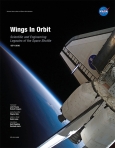
 Bob Crippen: My favorite is the cover shot of the Orbiter in space.

 Helen Lane: Every person involved with this book has a favorite, so there are at least 300 favorites, depending on who you asked.  I was so involved with each graphic that it is impossible to decide.  One of the privileges of working for NASA is the wonderful images and our graphic artists.  We had two outstanding artists to provide these images.

However, I am partial to the first protein crystal, shown on page 433, and the flight of the 747 carrying the orbiter over the desert, page 109. The photos of preparing the Space Shuttle for flight at the Kennedy Space Center are fantastic, but because we had to reduce the size, we did not get the full benefit.  All the photos and many of the graphics are available online through the Johnson Space Center or Kennedy Space Center.

Kamlesh Lulla: In my view, the Space Shuttle provided the scientific community with stunning views of our own home planet. It captured both the natural beauty and human drama: the book contains examples of both. My favorite image in the book is oil fires inKuwait, imaged by the Shuttle crew during a 1991 flight.

Wayne Hale: I particularly like the one of the Shuttle silhouetted against the sunrise colors of the atmosphere.  But there are so many beautiful illustrations, it is hard to pick out just one.

GovBookTalk: From your perspective, how has the Shuttle program advanced space exploration and how will that be reflected in NASA’s future endeavors?

Bob Crippen: It has shown we can operate on a frequent basis of sending crews in space, but more important it has shown the broad range of tasks that humans can accomplish in space.  That knowledge will be invaluable in planning our next major goal in human space flight.

Helen Lane: The focus of the book was the legacy of the Space Shuttle – what would it be remembered for in 10 years.  So much as been made of its failures that we wanted to explore its accomplishments, unlike most of the popular writings.  It is a complex story.  However, I think there are several aspects that changed human space flight forever, and maybe international relationships.

The Orbiters can easily take six and sometimes more people into space.  The Shuttle began when theU.S.was opening up technical jobs to women and minorities.  The Space Shuttle provided the golden opportunity to expand the astronaut core to these folks, plus a wide variety of careers from physicist to astronomer to medical doctors.  No other nation has done that.  Now, it is totally accepted that anyone with the talents, health, and desire can go into space – see the commercial space programs.

The Space Shuttle era moved from the competition (Space Race) between countries to collaborations.  As astronaut Mike Foale (p. 144) said, “When we look back 50 years to this time, we won’t remember the experiments that were performed, we won’t remember the assembly that was done.  What we will know was the countries came together to do the first joint international project, and we will know that that was the seed that started us off to the moon and Mars.”  There were many countries, including our former enemies,Russia and Japan, along with the Europeans involved in the space shuttle.  We flew folks of many nationalities, religions, and cultures.

Many today say it is the Hubble.  The Space Shuttle enabled the Hubble Space Telescope to perform well, leading to major discoveries.  However, through our work with Hubble, we learned to do big construction and repair projects in space.  The Space Shuttle taught us that the human is extremely capable of completing complex tasks in space.  Now, it is accepted that we can do this, but 30 years ago most thought that it was only the dreams of the science fiction writers.

The human, plant, and animal research provides the bases for belief that humans can survive long space flights, probably leading to long-duration stays, including growing their own food.  However, the research provided a warning too – from changes in space craft components, e.g. atomic oxygen, along with orbital debris and radiation, much of which we learned from entering space 135 times.

Finally, 135 re-entries taught us a lot about high attitude hypersonic flight, a must to enable  complex vehicles to come back to earth, manned or unmanned. Prior to the Shuttle program, there were calculations that provided models.  Now, we have real data to use for future modeling of space craft re-entry back to Earth.

Kamlesh Lulla: I agree with Helen. In addition, it is important to remember that each Shuttle mission was a mission to planet Earth. It was both a scientific laboratory and an in-orbit classroom for researchers and educators around the globe.

Wayne Hale: The Shuttle was envisaged as merely one part of a space infrastructure that would eventually lead to missions to myriad places in the solar system.  Since the Nation decided not to invest in the infrastructure to go farther, we learned the most we could from the shuttle; how to operate in space with large teams of people; how to fly safely through planetary atmospheres on the way to and from space.  These are all valuable lessons which will allow future endeavors in space to be successful.

GovBookTalk:  Now that the book is done, what are your feelings about it – and about the Space Shuttle program as well?

Bob Crippen: I am very proud of the book and the Space Shuttle program.  Both are major accomplishments and everyone involved can be proud of the results.

Helen Lane: As with most of the folks that worked in the Space Shuttle program, it is a bittersweet ending – the ending of the longest human space program using these vehicles over and over again in the extremely dangerous environments of space. So I am both sad and proud of working for NASA.

Wayne Hale: It was a privilege to be a part of history; to be a team member trying to do something difficult – nearly impossible – and extraordinarily valuable in the largest sense of the word; historic.  I feel nothing but pride and a sense of gratitude for being part of it.

Kamlesh Lulla: I believe new opportunities will emerge as this era comes to an end. We will continue our journey!

To browse a copy of Wings in Orbit online, click here: http://books.google.com/books?id=aEZo8dHqJbIC&printsec=frontcover&dq=wings+in+orbit&hl=en&ei=kOYeTs3ABYrV0QHi4PDXAw&sa=X&oi=book_result&ct=result&resnum=1&ved=0CDAQ6AEwAA#v=onepage&q&f=false

To purchase a print copy, click here: http://bookstore.gpo.gov/collections/wings.jsp

To purchase Wings in Orbit as an eBook, click here: http://books.google.com/ebooks?id=aEZo8dHqJbIC&dq=wings%20in%20orbit&as_brr=5&source=webstore_bookcard

To find it in a library, click here: http://www.worldcat.org/search?qt=worldcat_org_all&q=wings+in+orbit


Wings in Orbit: An Interview, Part I

July 26, 2011

 A few weeks ago, I blogged about Wings in Orbit: Scientific and Engineering Legacies of the Space Shuttle, 1971-2010, a new book published by NASA to mark the ending of the U.S. Space Shuttle Program. Wings in Orbit authoritatively documents the many accomplishments of the Space Shuttle program from its origins to the present. Beginning with a Foreword by astronauts John Young and Robert Crippen, this compelling book provides clear, accurate, and authentic accounts from NASA’s best subject matter experts, including aerospace engineers who worked with the shuttle program, and leading experts from the science and academic communities. The book captures the passion of those who devoted their energies to the program’s success for more than three decades. It focuses on their science and engineering accomplishments, the rich history of the program, and the shuttle as an icon in U.S. history.

In a first for Government Book Talk, we’ve  interviewed some key players in the development of Wings in Orbit. It’s an honor to welcome Robert Crippen, the pilot of the Space Shuttle Columbia’s first orbital flight into space, Dr. Helen Lane, Editor-in Chief of Wings in Orbit, Wayne Hale, Executive Editor, and Dr. Kamlesh Lulla, Co-Editor, for the first of a two-part discussion about this outstsanding new NASA book.

GovBookTalk: Given the immensity of the Space Shuttle program, it must have been challenging to select the topics for Wings in Orbit, and the authors to write about them. How did you go about that?

Bob Crippen: The intent was to try and capture the legacy of the Shuttle program, the good and the bad.  That helped focus the type of subjects to include.   We wanted to provide data that would help designers of future space craft.  Also it was important to capture the educational aspects of the program because that is a fundamental objective of NASA to stimulate young people to become interested in science and math.

Helen Lane: It was very difficult to determine the material to include, and that took over a year.  We used the definition —  must be an accomplishment that is used in other space programs or on Earth.  Second, we wanted a book of less than 700 pages so we knew we could not cover it all.  With the help of an extraordinary editorial board and interviews from leaders in the Space Shuttle program, we worked with all the NASA centers to finalize the work to be discussed. 

Once we knew the topics, we went to the engineers and scientists that did the work including those that were retired or worked in academia or industry. The contributors were volunteers.  They worked on the book because of their dedication to the Space Shuttle and the desire to let the public understand this program within the context of the accomplishments.  Once we got started, as you can see from the number of authors, we got great participation.

Kamlesh Lulla: The focus of this book is scientific and engineering accomplishments from the Space Shuttle program. This clarity of focus helped us organize the contents.

Wayne Hale: Selecting topics was not hard; eliminating topics and holding writers to a specific page count, that was hard.  Once we outlined the book — about 1/3 on the Shuttle system and how it operates, about 1/3 on the scientific achievements of the shuttle and its payloads, and 1/3 on all the rest, history, society, etc., the community poured out with suggested topics and articles.  It was an overwhelming flood.  Our editors and their staff had to work day and night to reign in the various authors.  The engineers, scientists, and managers associated with the space shuttle over thirty years were yearning to tell the story from their perspective.  Unfortunately we were not writing a set of encyclopedia volumes and were limited to just one book.  So it was a constant tugging match over what got in and what was left out.  I wish somebody would publish the Encyclopedia of the Shuttle because there is enough material out there.  Unfortunately, the magnificent team that was in place during the years of development of the Wings in Orbit book have largely dispersed and getting the people back together to write that encyclopedia would be nearly impossible.

GovBookTalk: The Space Shuttle has a place in our culture as well as in science and technology. For example, I was surprised to find out that both Rush and Judy Collins have written songs about the Shuttle. Did you run across some things along those lines that surprised you?

Helen Lane: We at NASA are probably more aware of the cultural aspects as we have movie companies, TV companies, artists, and musicians that regularly visit along with most sports teams.  Our problem was what to include in this book.

Kamlesh Lulla: I was surprised at the depth of influence Space Shuttle has on our cultural landscape: schools have been named after shuttle astronauts, Girl/Boy Scout local logos have used shuttle; the list goes on and on.

Wayne Hale: The poets, songwriters, movie script writers, and other interpreters of the shuttle really did surprise us.  I am constantly amazed at the outpouring of creative artistic work that surrounds a technological achievement like the Shuttle.  As engineers, we are trained to be “tight-lipped and technical” or as a former administrator once said “I’ll have feelings when I’m dead”.  The impact to society has been anything but tight lipped.  Spaceflight inspires the romantics and the dreamers; always has and always will.

GovBookTalk: One of the most interesting aspects of the book is the number of scientific and technical discoveries made as spin offs from the Shuttle program. Could you tell us about some of those?

Bob Crippen: I believe the book captures a large number of spin offs, an important element of the program.  This provides the public some more concrete results of the program.

Helen Lane: There are hundreds of spin offs.  NASA defines spin offs as technologies that can be patented and then licensed to commercial companies.  There is a Web site that provides the some details: http://www.sti.nasa.gov/tto/shuttle.htm  We chose examples to cover the gamut from health care to industrial applications.  This web site also highlights some of the sciences, such as the discussion on pages 421-429 on the bioreactor. 

GovBookTalk: Were there questions as to how to handle the story of the Shuttle accidents?

Bob Crippen: The two terrible accidents were an important part of the program.  We wanted to tell the story accurately to minimize the probability of future accidents.

Helen Lane: Yes, there was a lot of discussion on how to handle the accidents.  The author, Randy Stone, was a flight director during both accidents.  He tells the story as honestly as he could, but at the same time tried to transmit the emotions of the workers at the agency.  It was felt very hard, and he tried to give the reader a feel for that.  We wanted to have enough technical details for the reader, but not overwhelm them.  The crews’ story was discussed with the goal of a very dignified accounting of their deaths.

Wayne Hale: From the outset we promised ourselves that we would tell the truth and examine the bad as well as the good.  Randy Stone did a magnificent job of covering those complex events in a chapter that I wish could have been much longer.  We always learn more from our mistakes and failures than from our successes.  The genius of American creativity is that failure does not stop us but spurs us on to achieve even greater things.

GovBookTalk: The authors obviously interviewed quite a few people. Did they have any particularly memorable conversations with former astronauts or other well-known figures in the space program?

Helen Lane: Yes, we had the opportunity to interview the original engineers and leaders that built the Space Shuttle, including Bill Lucas (former director of  from Marshall Space Flight Center, Bob Thompson (first program manager), Chris Kraft ( founder of Mission Control as well as major leader), Aaron Cohen (former director of Johnson Space Center and directly involved with the orbiter, esp. the thermal protection system), and R.J Thompson, major manager of building the Shuttle main engines.  I was thrilled to be able to talk with them and hear their insights. They provided much of the wisdom and direction for the topics to include in the book. Much of their experiences are recorded on the NASA oral history, available online.  

Kamlesh Lulla: These interviews enriched the contents of the book. Their insights were very valuable in compiling the contents.

Wayne Hale: There were so many and almost every one was memorable; it would be really hard to pick out the top.  I was particularly impressed by the scientists and their discussions of the achievements of the experiments carried by the Shuttle.  As a Flight Director, we were always working on the next flight and rarely had time to look back and read the papers from those experiments which were often published months later.  There was far more in those scientific results than I realized. [End of Part 1]

Look for Part 2 of the interview later this week!

To browse a copy of Wings in Orbit online, click here: http://books.google.com/books?id=aEZo8dHqJbIC&printsec=frontcover&dq=wings+in+orbit&hl=en&ei=kOYeTs3ABYrV0QHi4PDXAw&sa=X&oi=book_result&ct=result&resnum=1&ved=0CDAQ6AEwAA#v=onepage&q&f=false

To purchase a print copy, click here: http://bookstore.gpo.gov/collections/wings.jsp

To purchase Wings in Orbit as an eBook, click here: http://books.google.com/ebooks?id=aEZo8dHqJbIC&dq=wings%20in%20orbit&as_brr=5&source=webstore_bookcard

To find it in a library, click here: http://www.worldcat.org/search?qt=worldcat_org_all&q=wings+in+orbit


The Great Beyond…On Earth?

July 20, 2011

Guest blogger Camille Turner takes a look at where our universe has come from and where it is going.

I think like many members of my generation, my interest in space sparked with  Steven Speilberg’s E.T. – The Extra-Terrestrial, and then there was no looking back. Cosmos and Culture: Cultural Evolution in a Cosmic Context from the NASA History Series maintains a lot of those same wonderful aspects as a Spielberg flick; it’s enjoyable, it defines itself through the particulars of science and the unknown, and it creates a universal appeal by tapping into the bigger questions of how culture itself has evolved to what it is today.

One of the really amazing aspects to this book is that it isn’t just an exploration of space: experts from an array of fields including science, history and anthropology, all explore culture in the context of the cosmos. By investigating a set of recurring principles, particularly evolution, the authors of each section relate a principle to the expansion of the cosmos, in such a way that makes perfect sense.

For instance, when evolution was first established as a concept, it was considered blasphemous. Now, it is not only accepted in every arena of science; it is a symbol of cultural values, as can be seen by the fish on the back of cars containing the word “Darwin” and occasionally growing feet.

The authors of Cosmos and Culture take these widely accepted ideas and push them one step further: if we see evolution everywhere, even in the evolution of technology and physics, how could the cosmos not be evolving too?

Even better: the entire book is written in layman’s terms. By utilizing diagrams when needed and expanding on common metaphors to maintain the reader’s interest, this seemingly intimidating volume becomes a manageable and enjoyable read.

For scientists, space enthusiasts and history lovers alike, this volume transcends most lines between astronomical and sociological research to fuse into a compelling detailing of where our universe has come from and where we are going, both culturally and evolutionarily.

You can get a copy from our online bookstore or find it in a library.


Are We Really Prepared for the Worst?

July 13, 2011

Guest Blogger Matthew Brentzel takes a look at the capabilities of U.S. Weapons of Mass Destruction (WMD) response teams.

Every so often, I look back on those horrific atrocities committed on September 11, 2001.  I remember being in middle school, where the teachers were reluctant to inform us of what was going on.  I also remember the news stories questioning the capability of our country to deal with such a catastrophe.  Although we are surrounded by fear and uncertainty in trying times, we can always find relief by looking towards the brave men and women that put their lives on the line for the good of our country.

Events like this have occurred before.  I’ve heard stories from my grandparents about Pearl Harbor and the impact it had on history.  We can all agree that these events were truly awful, but we must also accept the fact that we live in troubled times and events like these may be minor compared to the crises that could occur.  Are We Prepared?: Four WMD Crises that could Transform U.S. Security, by the Center for the Study of Weapons of Mass Destruction takes a stab at discussing this heated topic in a serious but effective manner.

I really want to stress “serious, but effective.”  Through a series of four crisis scenarios, Are We Prepared? looks at such issues as nuclear proliferation, the release of chemical weapons, and even a nuclear explosion in a major city.  Perhaps most of us are more inclined to worry about preventing these events rather than preparing to respond to them, but there are times when prevention is not enough and response is necessary.  While reading this book, at first I was taken aback by its willingness to accept the possible losses in one of the scenarios, but this approach enlightens the reader by stressing the high importance of applying appropriate countermeasures. This clear, concise report delves into four different crisis simulations in detail, including preventative measures and how we can be ready to counter such events.  It also goes on to discuss the policy implications of each of these crises for the United States as a whole.

Perhaps the frightening subject matter may prevent some from reading it, but Are We Prepared? documents what we need to do to succeed in the future against an enemy for whom we perhaps can never be fully prepared.  In addition, although at first I was reluctant to believe it, this book helped me realize that we will be able to move on as a nation even though the events it describes could severely alter our future.  The only question is, “Are we prepared?”

If you are interested in politics or international relations, you can find this fascinating book on the US Government Printing Office online bookstore or browse it in a library.


Good Things in Plain Packages

July 8, 2011

Although I generally try to fight the stereotype of Government publications as weighty tomes with austere, distinctly non-decorative covers, I must admit that many worthy documents do come clad in such sober raiment.

Take, for example, Invest in Women, Invest in America: A Comprehensive Review of Women in the U.S. Economy. This publication of the congressional Joint Economic Committee, like many such documents, presents its material straightforwardly and unadorned except for an assortment of graphs and charts, all in black and white.  But the format is immaterial when matched against the importance of its subject. Indeed, the very sobriety with which the economic progress of American women, or lack thereof, is presented actually increases the credibility of its findings, at least for me.

One important message is that women have made significant economic strides over the last several decades. Yet certain persistent issues documented in this report – the pay gap, under-representation of women in top corporate jobs, and the problems of working mothers – still block the achievement of women’s economic equality.

Of course, the economic downturn of the last few years only serves to emphasize these issues. I was particularly interested in a survey that covered how employers were dealing with this. A surprisingly large percentage of employers said that they were actively helping their employees to cope with the recession and also maintaining flexible employment policies. I was also struck by number showing that without Social Security, far more older women than men would live in poverty.

Although various submissions within Invest in Women, Invest in America suggest possible solutions to the problems of women in our economy, I was most impressed by the depth and quality of the research, without which no really sound solutions are possible. Sober, serious, and detailed, this publication is a valuable resource for studying a complex and long-running social issue. You can read it here or here or get a copy here. It’s also available in libraries.


The Few, the Proud, the Anthology

July 6, 2011

 Book buyers and book hunters (who tend to be one and the same) are funny about bibliographies. Non-fiction books need to have them, they’re great to skim through to locate more books on favorite topics – but they’re not exactly scintillating reading. When I saw that the title of this 2011 Library Journal notable Government document was U.S. Marines in Iraq, 2004-2008: An Anthology and Annotated Bibliography, I had mixed feelings. What percentage was going to be anthology as opposed to bibliography?

It really wasn’t a problem. Most of the book is anthology – and not just selections from the Marine Corps Gazette, although there are some excellent ones from that estimable publication. It also includes articles from such distinctly non-military sources as Vanity Fair and Foreign Affairs, and they’re not always totally favorable. Coverage of controversies such as the killings of civilians at Haditha and blunt discussions of whether the American course of action in Iraq was selfless or madness make this collection a lot more than just a “how-to” guide to irregular warfare or IEDs (improvised explosive devices). The U.S. Marines might not love everything journalists and experts write about them, but they’re willing to address criticism, not just ignore it – and I liked this open-mindedness. As a bonus, each article begins with a striking color photograph of Marines in their varied roles inIraq, from combat to pacification.

The bibliography, as the title says, is annotated, so it’s a handy guide to the mainly periodical literature covering these crucial four years of U.S.intervention in Iraq and undoubtedly will be useful to scholars and soldiers alike. U.S.Marines in Iraq, 2004-2008 is a fine book for readers and bibliography-philes alike. You can find it here or in a library.