“A Great Thing for the Cause”: Black Soldiers in the Civil War

September 1, 2011

Of the writing and publishing of books about the Civil War, there shall be no end – especially since this year marks the beginning of the sesquicentennial of that most violent and consequential conflict. I’m a bit of a Civil War buff myself and just finished reading Fields of Blood: The Prairie Grove Campaign, which was fought in Arkansas – one of the forgotten fronts of the war. In discussing the subsequent military career of Union General James G. Blunt, it mentioned his victory at Honey Springs in Indian Territory the following year. Now I’ve learned that Honey Springs “marked the first time in the war that black soldiers in regimental strength had carried out a successful offensive operation against Confederate troops.” I’ve also learned that the 54th Massachusetts, made famous by its gallant but unsuccessful attack on Confederate Fort Wagner, as depicted in the film Glory, later steadied Union forces at a crucial juncture of the battle of Olustee – the largest Civil War battle fought inFlorida.

How did I learn all of this? By reading a new book that I predict will become a classic – Freedom by the Sword: The U.S. Colored Troops, 1862-1867. I’ve been waiting for this book ever since I learned that the Army’s Center of Military History was working on it. Although the use of black troops by the Union has been studied from many angles, this is the most thorough operational history I’ve seen – in other words, this is a detailed account, by region, of the actual military activities in which these troops engaged. For every heroic charge, these soldiers, like any soldiers in war, spent lots of time patrolling, garrisoning, and guarding. As someone once noted, army life in wartime is made up of long stretches of boredom punctuated by short periods of extreme fear. In addition, poorly managed logistics and spotty (to say the least) medical services created their own special negatives, especially for troops that did not always receive adequate (or any) training. Reading about these gritty details is an excellent corrective to the romantic take on war so prevalent among Civil War soldiers before they “saw the elephant,” a colloquialism of the day for engaging in combat.

Freedom by the Sword also addresses problems unique to black soldiers – the possibility of re-enslavement or massacre if captured. After the notorious slaughter of black soldiers by Nathan Bedford Forrest’s Confederates at Fort Pillow, which soon was recognized by the South as “a propaganda weapon they had handed their opponents,” retaliatory actions and counteractions were succeeded by a mutual realization that such crimes cut both ways. In these cases, fighting for freedom had a steep price, but one that ex-slaves and free blacks alike were prepared to pay.

Freedom by the Sword is an important scholarly resource based on wide-ranging research, as well as a compelling account of men whose real accomplishment, beyond military victory, was “to assert their right to full citizenship and, by extension, that of all their kin.” Serious students of the Civil War will be using this book for many years to come. You can browse through Freedom by the Sword here, get your own copy in either paperback or hardcover, or page through it at a library.


New Caledonia and the New Yorker?

August 4, 2011

From time to time I’ve talked about the little World War II-vintage booklets produced to familiarize Army and Navy personnel with various places around the world that the fight against the Axis might compel them to go. Some of those places are still hot spots, like Iraq. Others were obscure then and remain so today, unless you’re a specialist or someone with an inordinate curiosity about things in general (me).

For out of the way places, you can’t beat New Caledonia. This large island in the Southwest Pacific, a French territory only now looking towards a future referendum on independence, is populated by Melanesian Kanaks and French settlers and has an economy centered on nickel mining. During the war, however, it was the island’s strategic position that made it the subject of a Pocket Guide to New Caledonia. Not long after the fall of France in 1940, the French colonials on the island revolted against their pro-Vichy governor and declared for the Free French, so the island and the harbor at Noumea, the colony’s capital, became a huge naval repair, troop transit, and logistical nexus for America’s armed forces. TheU.S. presence had a huge and generally positive economic, political, and cultural impact on the Kanak population, but stimulated an almost paranoid reaction among Free French officials, who saw the American “occupation” as a threat to their colonial dominance. Clearly, our soldiers and sailors needed some guidance on how to handle these complicated crosscurrents!

Pocket Guide to New Caledonia does a very good job of outlining New Caledonia’s history and cultures, with an emphasis on tolerance and understanding of the customs and faiths of others, whether French or Kanak. It also manages a light touch when discussing some topics, to wit:

“People living in the tropics or subtropics are likely to be exposed to       hookworm and other intestinal parasites, and to be bothered by dysentery. To check this latter ailment, the natives eat a certain grass which is called ‘dysentery grass’ and is supposed to have a herbaceous effect. Our troops have made not a few noble experiments with this particular variety of hay, and up to date nobody has been hurt, though the record is confused as to whether anybody has been helped. So if you see a creature eating grass inNew Caledonia, don’t shoot! It may be the corporal.”

Like other wartime publications, this booklet also benefited from the work of a well-known artist. While Dr. Seuss handled malaria prevention, the great New Yorker cartoonist George Price drew theNew Caledonia short straw (see left) and provides a comic glimpse at GI life in the tropics.

I enjoyed browsing through Pocket Guide to New Caledonia. The Government did a good job of prepping folks for trips to places that most of them never imagined going, and now we can make the same visit thought these little time capsules. You can read it here or in a library.


A Military History Buff’s Delight

June 22, 2011

Every so often I like to delve into the pile of magazines that accumulate here at Government Book Talk world headquarters. It strikes me that some of them would be right at home in the periodicals rack of one of the big chain bookstores. Take the latest issue of Army History, for example. The folks at the Center of Military History do a fine job of producing a military history magazine that combines first-rate design and production values with well-researched yet readable articles on the Army’s history.

The lead article in the spring 2011 issue is “Foraging and Combat Operations at Valley Forge.” The author, Ricardo A. Herrera points out the mythos of Valley Forge – martyred Continental soldiers virtuously starving while the sinful Brits feast and frolic in Philadelphia, and George Washington broods magnificently – has obscured the ongoing combat and reconnaissance patrols and foraging expeditions that kept that same army from disintegrating under the impact of adverse weather and supply conditions. His account of the great Forage of 1778, in which General Nathanael Greene commanded a force of almost 1,500 regulars and additional militia forces on a wide-ranging effort to corral any available supplies from the farms of Pennsylvania and new Jersey and destroy what could not be hauled away – both actions to deprive the British foragers of those same supplies – made me look at the year of Valley Forge in a whole new way.

I was particularly interested in the New Jersey segment of the Great Forage, led by General Anthony Wayne. Far from being “Mad Anthony,” Wayne led a relatively successful effort to seize supplies and spar with enemy forces while keeping a really rash cavalry officer – Casimir Pulaski – from getting himself and his men killed through impetuous charges. Some of the action occurred in a part of the state we drive through every summer on the way to the Jersey shore – the next time I’m in the Evesham/Mount Laurel area, I’ll have to inquire about this campaign.

There’s much more in this issue – an account of the repression of Filipino revolutionaries inSamar during the Philippine Insurrection, as well as several book reviews. At least one of the reviews, on the post-World War II war crimes trial of the German general Albert “Smiling Albert” Kesselring almost had me reaching for my credit card on the spot.

You can read this issue here, get a subscription here, or find issues in a library. Trust me, if you’re a military history scholar or buff, you’ll find something of interest in every issue – I sure do.


GPO and the Stars and Stripes

March 28, 2011

Because this year marks the 150th anniversary of the Government Printing Office, I’ve been trying to highlight some of its history by featuring some unusual Government publications with a GPO connection. How’s this for unusual: a newspaper that was not printed through GPO, not printed in the United States, and staffed by a number of distinguished authors and critics as well as a future Public Printer.  It took advertising, had 526,000 readers at its peak, yet only stayed in business for about a year and a half. It was, gentle readers, the original Stars and Stripes, the paper of choice for the American doughboys of World War I. (Stars and Stripes currently is published as a non-Government, DoD-authorized newspaper: http://www.stripes.com/customer-service/about-us).

Thanks to the estimable American Memory project of the Library of Congress, the entire run of the U.S. Army’s Stars and Stripes, published in France from February 8, 1918 to June 13, 1919, is available online for browsing. A special American Memory presentation, “A Closer Look at The Stars and Stripes,” highlights the contributions of such luminaries as New Yorker founding editor Harold Ross, drama critic (“Old Vitriol and Violets”) Alexander Woollcott, literary critic John Winterich, sportswriter Grantland Rice, and columnist and “Information Please” radio show panelist Franklin P. Adams (greatly admired in his day and now sunk without trace – who now remembers “The Diary of our own Samuel Pepys”)?  The “Closer Look” also examines soldier-authored material, censorship, and other issues affecting Stars and Stripes. Some of the doughboys’ poetry even transcends doggerel, although not always by much.

Finally, a roster of Stars and Stripes staff reveals the name of Augustus E. Giegengack – a euphonious cognomen, to be sure (hmm – I must be channeling Alexander Woollcott) –   the future Public Printer to whom I referred above. Sergeant Giegengack is listed as working in Circulation, but he started out in charge of printing the paper and expanded his reach to various circulation, delivery, and other tasks. As a poem in Stars and Stripes put it:

“Mail, wrapping, typing, couriers – his duties are a score,

Whenever we can think of it we’ll give him twenty more;

I often wonder how one man can handle such a batch –

When does this great executive get time to stop and scratch?

Nothing neglected, nothing slack

In the department Giegengack.”

After his discharge from the Army, the sergeant returned to the printing industry until his nomination as Public Printer by Franklin Delano Roosevelt, following which he ran GPO from 1934 until 1948 – the longest serving Public Printer in GPO history. He’s also the only GPO chief ever to be profiled in the New Yorker – a three-parter in 1943. He seems to have been both a colorful character and a very efficient GPO chief executive, and the profile is well worth seeking out (New Yorker subscribers can access it online). Many libraries also have extensive runs.

The Stars and Stripes was not only a fine newspaper, but perusing its pages takes one back nearly 100 years to see how the soldiers of the day viewed the war, their situation, and their country. (I wonder if many of today’s soldiers write doggerel?). Even the ads are fun to read! A product of the well-managed “department Giegengack,” it’s a paper that’s still readable and thought-provoking today, when the last American World War I veteran has just left us for “Over There.”


A Snapshot of the Surge in Iraq

February 2, 2011

Government publications sometimes seemed ripped from the headlines, like the oil spill and financial crisis reports I’ve blogged about recently. Even history can be amazingly contemporary, though, especially if the historian is working alongside those who make the history. The U.S. military has a tradition of embedding historians in its fighting units so they can record history as it happens. It’s a long way from academe to Iraq, but the opportunity to write “a first draft of history even as it unfolds” must be an alluring one.

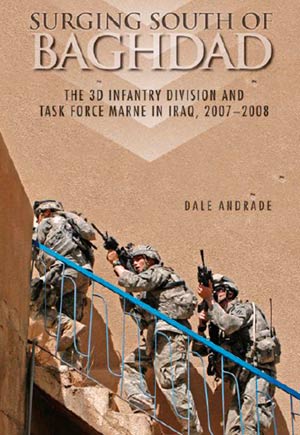
Dale Andrade, who’s currently with the Army’s Center of Military History (CMH), knows all about that, I’m sure. In Surging South of Baghdad: The 3rd Infantry Division and Task Force Marne in Iraq, 2007-2008, he recounts the experience of one unit participating in its third deployment to Iraq. As CMH Chief Historian Richard W. Stewart notes in the Foreword, at this point in the Iraq War, “For better or worse, the George W. Bush administration decided to gamble on a troop increase, sending thirty thousand troops to Iraq in order to stop the bloodshed and bring stability to Baghdad and the surrounding area. By June 2007, they were all in place, and the so-called surge began.”

Surging South of Baghdad brings home the utter complexity of the political and military situation in Iraq. The Army had to be aware of a multiplicity of opponents, many of them working at cross-purposes with one another. These factions were and are political “improvised explosive devices” motivated by internal rivalries and conflicting ideologies that had to be understood to be combated effectively. But the book also portrays the human side of war: grief over dead comrades, the desire for payback, the need to understand and even empathize with civilian Iraqis who may or may not be trusted – all described in tandem with the strategic and tactical progress of the Division as part of the surge.

This book is a detailed look at how the surge was implemented from a “boots on the ground” viewpoint, enriched by the perspective that a participant with analytical skills can bring to the description of historical events – a tradition in writing military history since Thucydides. You can read it via the CMH Web site, get your own copy here, or find it at a library.


From Segregation to Integration in the Armed Forces

November 10, 2010

This year’s Veterans Day program at the Government Printing Office features a speaker who served in the U.S. Army from 1947 to 1951, including 9 months on the front line in Korea. He’s a member of the Buffalo Soldiers organization, which preserves the memory of the six all African-American Army units formed after the Civil War for service in the American West. Their service, also commemorated at the Buffalo Soldiers National Museum, is a proud chapter in American history but also a reminder of the days when the armed forces were segregated by race.

Integration of the Armed Forces, 1940-1965 tells the story of how this not so creditable period in our history was brought to an end. This definitive administrative history provides a capsule history of African-Americans in the armed forces and how both the professed war aims of the U.S. and civil rights activists combined to bring this issue to the fore. Interestingly, the book also points out that the post-war attempt to maintain segregated military units through the use of quotas while expanding the pool of African-American servicemen by conscription caused even very traditional military men to reassess the need for integration for the sake of military efficiency, if nothing else. After President Truman’s 1948 Executive Order 9981, calling on the armed forces to provide equal treatment and opportunity for black servicemen, the barriers began to fall, although other issues, particularly housing, made the process of integration extend well into the 1960’s.

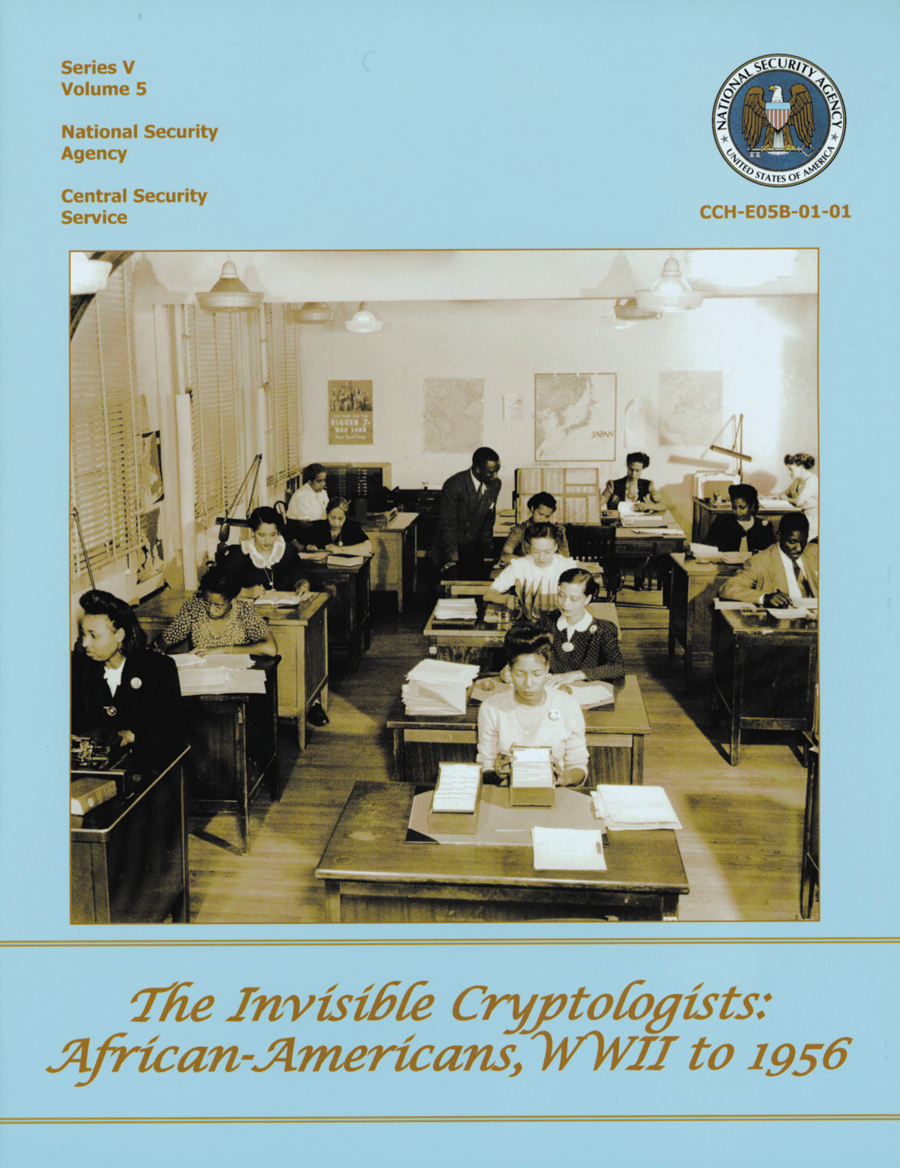
Even civilian employees in the defense establishment endured the pains of segregation and the slow evolutionary path of its demise. The Invisible Cryptologists: African-Americans, WW II to 1956 is a sort of microhistory of one small Government agency’s journey from racial injustice.  World War II saw what was then the Signals Intelligence Service (SIS) hire African-Americans, up until then employed mainly as messengers, to decipher commercial telegraph codes that might contain valuable information emanating from companies Tokyo, Berlin, and other international locations. After the war, the machine section (or “the plantation,” one of its numerous unflattering nicknames) used African Americans to transfer Russian intercepts from radio tapes to punch cards – a tedious job in hot and dirty conditions without any realistic possibility of promotion up and out.

Slowly, things began to change, as Executive Order 9981 and other developments ushered in an era when jobs as polygraph operators and, by the 1950’s, linguists and analysts, began to open up. The Invisible Cryptologists is at its best when it not only tells the story of segregation and integration, but lets some of the characters in that story speak for themselves. As one former employee said, “I was so involved in what the Agency stood for, and I wanted it to be better. I had a feeling things were going to get better. Everybody in there was not evil. I felt that one day African Americans would be able to break out of this box.”

Yes, it was a discreditable period, but these books show that our Government and our country, when confronted with injustice, were able to change. They’re both worth reading. You can find Integration of the Armed Forces here or buy a copy here. You can read The Invisible Cryptologists here or order a free copy here.


Ball’s Bluff: A Little Battle with Lasting Consequences

September 20, 2010

A few Veterans Days ago, my wife and I made a day trip to Ball’s Bluff Battlefield Regional Park  in Loudon County, Virginia. You’d never know it was there, tucked away as it is behind a suburban housing development. Once you step out of your car and into the park, you’re in another place altogether. For one thing, Ball’s Bluff is really two sites in one.  Just inside the park is a small National Cemetery, containing the remains of 54 soldiers in 25 graves, all killed during the Battle of Ball’s Bluff. We were there on a cold, cloudy day, the kind of day that really made us think somberly about that long-ago battle near the beginning of the Civil War. Given that it was a small engagement, we were able to walk most of the battlefield, up to the edge of the high bluff where the inexperienced Union soldiers made their last stand. 

This battle was relatively inconsequential militarily, but it had a larger impact politically. An overly ambitious reconnaissance in force that resulted in the death of Abraham Lincoln’s friend Colonel and Senator Edward D. Baker, it cost Union General Charles Stone his career and was the impetus for the establishment of the Congressional Joint Committee on the Conduct of the War, which became long-term Radical Republican thorn in the side of Lincoln’s Administration.

The U.S. Army’s Center of Military History has a neat little booklet on the battle that I wish we’d had that day. Battle of Ball’s Bluff was developed as a staff ride guide for Army personnel so they can “learn from the past by analyzing the battle through the eyes of the men who were there.” The best part of the booklet is the blow-by-blow account of the battle, accompanied by a number of detailed maps. As I said, the battlefield is relatively small, so you can really get a sense of what happened in just an hour or two.

What sticks in my mind is the fearful predicament of the Union troops, unfamiliar with the area and forced back to that steep bluff above the Potomac.  Many of them jumped to their deaths or died on the narrow little strip of land beneath under a rain of Confederate musket fire (left). I’m not that crazy about heights, so looking down from the top of that cliff really brought at least a bit of the grim reality of that day home to me.

You can read about this little battle with lasting consequences here, get your own copy here, or find a library that has a copy here.


A Different Kind of Translator: The Work of Nisei Linguists

July 22, 2010

It’s always good to get a fresh perspective on familiar things – in this case, on those Government books we love. I’ve asked the summer interns in our office to select a publication that interests them and write about it. What they picked and wrote about is really interesting, and I think you’ll feel that way, too.

 Our first intern is Camille Turner, a rising junior at the University of Delaware.

The first time that I really began to grasp the severity of World War II was when I did a project on Pearl Harbor. Yet, even after years of learning about  the techniques and tactics utilized by all countries involved, and the toll it took on participants and non-participants alike, I had never heard of anything so charged  with personal conflict as the decisions made by second generation Japanese American (Nisei) soldiers.

Nisei Linguists: Japanese Americans in the Military Intelligence Service during World War II from the Army Center of Military History details the efforts of Nisei who were recruited by the U.S. Army as translators and interpreters. Trained in a secret school, these Nisei soldiers were placed in a unique position, determined to protect the country in which they were raised, while simultaneously embracing the Japanese culture they were taught to value and burdened by the knowledge that many of their family members and friends had been removed from their homes on the West Coast and placed in isolated camps by the country and Army they were serving. (Don’t be concerned if you haven’t heard about this group of nearly 6,000 soldiers: for many years, their work was a military secret, and no official history was published about them until 1994).

As this book explains, in a time of strained American and Japanese-American relations, the Nisei linguists helped to ease tensions and maintain communication between the two groups. Complete with maps and photographs documenting the training process, it follows the work of the linguists chronologically, including the upbringing of several officers, and their service up until the early occupation of Japan in February of 1946.

One of the remarkable aspects of this text is the objectivity of the author in relating the specific events the Nisei had to face, including the bombing of Pearl Harbor by their ancestral country. The author manages to detail respectfully the feelings of multiple groups of citizens in the United States through a multitude of controversial and painful incidents, including the strain on the Nisei officers as their loyalty was questioned continuously by the country they were working to defend against the country they were taught to cherish and respect.

This book is a must read for any World War II enthusiast and a great source of insight into a little-known chapter of military history. You can get a copy here, review it here, or find it in these libraries.


Notable Documents 2009: Walter Reed

May 27, 2010

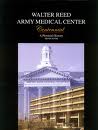
School kids used to learn that, in the aftermath of the Spanish-American War, Walter Reed helped to discover that yellow fever was transmitted by mosquitoes. Many of us have heard of “Walter Reed Hospital” as a place where for many years Presidents and wounded warriors alike have received medical care. What I didn’t realize is that Major Reed died only a year after he left Cuba. His friend Major William C. Borden, head of the Army General Hospital, was so devastated by Reed’s death that he worked for years to raise funds for a new hospital to be named after his friend. Walter Reed General Hospital opened in May 1909 and, as Walter Reed Army Medical Center, celebrated its centennial last year.

Walter Reed Army Medical Center Centennial: A Pictorial History, 1909–2009, one of Library Journal’s 2009 Notable Government Documents, provides both text and photos of this remarkable institution. Of course, the emphasis is on the treatment of armed forces personnel, not Presidents; the latter appear as visitors, not patients, as do Bill Cosby, Roy Rogers and Dale Evans, Bob Hope (twice) and others. The real focus is on regular GI’s being cared for and undergoing rehabilitation. I was interested to learn that occupational therapy was a part of Walter Reed’s activities from its earliest days. Some of the photos are grim, depicting the struggles of seriously wounded GIs to regain use of their limbs or learn to use prosthetic ones. There are also numerous shots of construction as Walter Reed expanded over the years.

The verdict: A part of military history that all of us should remember, far from the parades and worth thinking about as we approach the Memorial Day weekend.

You can find Walter Reed Army Medical Center Centennial: A Pictorial History, 1909–2009 here, or locate it in a library here.


“Now, when I was in Baghdad” – A Short Guide to Iraq

May 11, 2010

One of my first posts on this blog concerned a World War II booklet illustrated by Dr. Seuss. It was one of a cache of such booklets that had belonged to one of my uncles during his wartime service as a Navy pilot. Although not collector’s items, these little guides to China, India, Burma, West Africa, and even New Caledonia, fascinated me as a kid. As an adult, both before and after my discovery that the Dr. Seuss booklet was a collector’s item, I didn’t give them much thought.

Several years ago, though, they were brought to mind by a call from the person who was then in charge of GPO’s public relations office. Every so often we get calls about long out of print Government publications, and this was one of them. A reporter was asking about A Short Guide to Iraq and did I have any information about it? “Well, yes. Oddly enough, I own a copy.” I explained the background and said I’d rummage around at home and find it.

Within a few hours, I was in her office doing a telephone interview with a wire service reporter with a British accent. She seemed fascinated by how I had come to own a copy of the booklet she was seeking. As far as I know, the story never went anywhere, but I’m still amazed at how much excitement these old documents can stir up.

As for A Short Guide to Iraq, what seems to engage people is that American troops were sent to Iraq during the Second World War and that so much of the advice it provides seems relevant even today. A university press has reprinted a facsimile under the title “Instructions for American Servicemen in Iraq during World War II” (the cover looks different but it’s basically the same book). It’s a quick read and very well done for its purpose, which was to give a quick overview of Iraq and its people for the average GI or sailor. It’s similar in intent, although less elaborate in execution, to the Afghanistan and Pakistan Smart Books I blogged about a couple of weeks ago. Click here to read this neat little booklet.


NEW: Afghanistan and Pakistan Smart Books

April 29, 2010

These little publications contain a huge amount of information about two nations that make the news regularly. Developed by the Army’s TRADOC (U.S. Army Training and Doctrine Command) Army Culture Center, they include information on the history, politics, economy, society, and culture of the many peoples that comprise Afghanistan and Pakistan. Although in the past the military has produced guidebooks to various countries in which U.S. troops have been stationed (and I’ll be talking about some World War II-vintage booklets in a future post), these Smart Books provide a more sophisticated and analytical approach to the cultures with which they deal. Either would be invaluable in a classroom setting or as a quick reference source.

The Afghanistan Smart Book and the Pakistan Smart Book are both available from GPO.