Notable Documents: Historic Orchards

July 1, 2010

Although Keats called autumn the season of mellow fruitfulness, these days you can find just about any fruit at any time, thanks to modern agriculture and international trade. It was not always so, though. Fruitful Legacy: A Historic Context of Orchards in the United States, a Library Journal 2009 Notable Government Document, reveals the surprisingly complex history of fruit trees in the United States. In colonial times, the trees tended to be tall and grown from seed. The resultant fruit was not particularly tasty because apples and other tree fruits were grown for cider and animal feed, not to be eaten raw by humans. So-called garden orchards, tended behind walls by the well-to-do, were the main sources for “eating fruit”, and if a particular variety was out of season, our forebearers were out of luck.

Grafting and other techniques eventually produced larger and more productive orchards. These days, trees are bred to be dwarfs, which explains why older engravings show kids tossing down apples or pears from high up in trees, while today’s apple pickers are about as tall as the trees they pick from.

Aside from lots of information on the continuing evolution of America’s orchards, this book from the National Park Service’s Olmsted Center for Landscape Preservation also addresses the surprisingly numerous heritage orchards and individual trees that are, or are eligible to become, entries in the National Register of Historic Places. Some of these are reserves for the germplasm of fruit varieties that otherwise would be lost to us, while others preserve the way orchards and fruit trees were planted and used throughout our history.

Fruitful Legacy provides a bonus: a selection of gorgeous botanical drawings of classic American fruits, as well as photos of fruit trees and fruit tree stands in national parks and monuments.

I found Fruitful Legacy to be a surprisingly interesting read, a generator of ideas for trips to parks (the Moses Cone Memorial Park, part of the Blue Ridge Parkway, sounds intriguing and not impossibly far from where I live), and a visual treat. You can browse it here, get a copy here, and find it in a library near you here. Now, should I have an apple or a pear with lunch?


Senator Byrd and the Roman Republic

June 30, 2010

The passing of Senator Robert C. Byrd from the American political scene also marks the departure of a great American character. This fiddle-playing high school graduate who earned a law degree at night (in 1963) and a college degree via correspondence courses (in 1994) regularly quoted the Bible, the classics, and large swaths of memorized poetry on the floor of the Senate was also a historian of the institution he loved most: The United States Senate.

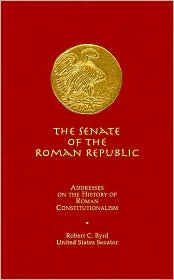
Curiously, his reverence for the Senate and fierce defense of its constitutional role resulted in a most remarkable Government book on ancient Rome: The Senate of the Roman Republic: Addresses on the History of Roman Constitutionalism. The roots of this book lay in Senator Byrd’s determined opposition to the idea of the line-item veto, which would grant the President the power to veto particular items in appropriations bills. Byrd viewed this proposal as usurping the Senate’s role and a threat to constitutional checks and balances. As a result, to quote Senate Historian Richard C. Baker’s Foreword, the Senator “initiated a series of fourteen addresses in opposition to the proposed line-item veto concept. During the following five and a-half months, he delivered each of the speeches – packed with names, dates, and complex narratives – entirely from memory and without recourse even to notes on consultation with staff aides.” (Italics in the original).

(Note: I knew Dick Baker when he was Senate Historian and asked him about the Senator’s role in writing both this book and his 4-volume The Senate: 1789-1989. He assured me that the Senator was indeed the author of these books, not just a speech reader.)

The Senate of the Roman Republic is replete with scholarly references to Polybius, Tacitus, and Montesquieu, as well as impassioned arguments against the line-item veto – surely a unique method of resisting encroachment on the rights of the Senate, and one we’ll not likely see again. Likewise, the departure of Robert Byrd, a man of the 20th century whose personality retained a bit of the flavor of the 19th, will leave Congress with a bit less color and zest.

You can browse in The Senate of the Roman Republic here, get a copy here, or find it in a library here.

To view a page listing all of Senator Byrd’s historical works, go here.


100 GPO Years Revisited

June 25, 2010

My agency, the U.S. Government Printing Office (GPO), usually is more concerned with getting information from other Federal agencies digitized, printed, posted, and disseminated than in publishing our own books – that’s been our job in the Federal Government for almost 150 years. When we do publish something of our own, such as our Style Manual, about which I blogged awhile back, it’s worthy of note.

That’s my lead-in to 100 GPO Years, 1861-1961, published to mark GPO’s centennial. I’m sure it didn’t make a particular splash in the world of books back then, but it’s a rare and beloved commodity for those of us who work here, or used to. After a brief history of pre-GPO public printing, replete with scandals and corruption (and that’s why Congress decided to establish GPO), the book chronicles GPO’s activities year by year. The growth of GPO paralleled that of the Federal Government, spurred on by the Civil War, two world wars, the Cold War, the New Deal, the Great Society, and all of the other historical developments that gave rise to America’s present status as a superpower. For all of these momentous chapters in our history, GPO was there, printing the Emancipation proclamation, the declarations of war for both world wars, the UN Charter, and innumerable other documents of our democracy. Remarkably, though, we’re still at the same location as we were in 1861, at the corner of North Capitol and H Streets NW in Washington, DC. Instead of one small building, there are four large ones, as well as facilities nationwide.

On June 23, 2010 – the 150th anniversary of the congressional resolution that established GPO – a reprint of 100 GPO Years was a centerpiece of the kickoff of GPO’s sesquicentennial celebration.  It’s a facsimile reprint, but with a new Foreword, an excellent index, and a colophon that describes the typefaces of both printings. On March 4, 2011, 150 years to the day after the inauguration of both GPO and Abraham Lincoln (it was the first day GPO was open for business), GPO will publish a new history. Until then, you can learn a lot about us by reading the straightforward narrative and sampling our unique historic photograph collection in 100 GPO Years. You can read the reprint on our anniversary Web site or purchase a copy here. Soon it will be available in Federal depository libraries nationwide. If you can’t wait, you can find the original printing  in some libraries.

Happy birthday to us!


Notable Documents: A Ponzi Scheme and the SEC

June 23, 2010

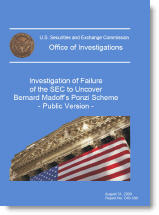
One of the points I’ve been trying to make via this blog is that Government publications can be well written, well designed, and otherwise comparable to books published by mainstream trade and academic publishers. For this Library Journal Notable Federal Government Document, though, I’m not going to make that point. Investigation of Failure of the Securities and Exchange Commission To Uncover Bernard Madoff’s Ponzi Scheme is the classic stereotyped Government document. It has an indigestible title, a 19-page table of contents, weighs a ton (or at least 3 pounds, 4 ounces) and is written in deadpan Governmental investigatory prose. In addition, the subject matter is pretty depressing. Stings and Ponzi schemes may be amusing in movies and books, but not if you’re the one who gets taken to the cleaners. To make matters worse, this report demonstrates that the Securities and Exchange Commission (SEC) repeatedly failed to detect wrongdoing on the part of the perpetrator.

So why did Library Journal cite this report as a Notable Document, and why am I blogging about it? According to LJ, “This report examines the agency’s failure to investigate complaints it received over many years regarding Madoff’s activities. Along with supplementary material on the SEC web site, it clearly and fully addresses the commission’s shortcomings.” According to me, as an assiduous reader of international news, there are few places in the world where a government would investigate itself intensively and publish irrefutable information on its shortcomings to its own citizens. This report was covered thoroughly by the media when it was first issued. Although few would read it from cover to cover (me included), the facts are now out there for all to see and ponder.

Investigation of Failure of the Securities and Exchange Commission To Uncover Bernard Madoff’s Ponzi Scheme is available online, for purchase, and in libraries.


Notable Documents: The Navy and Indochina, 1945-1965

June 18, 2010

Continuing with my review of Library Journal’s 2009 Notable Government Documents, today’s selection is The Approaching Storm: Conflict in Asia, 1945-1965. This first volume in a new Naval History and Heritage Command  series is designed to present “well-illustrated, engagingly written, and authoritative booklets that detail the Navy’s major involvement” in the Vietnam War.

The Approaching Storm is an auspicious beginning to this series. Its concise text places the Navy’s Southeast Asian operational activities in the post-World War II decade into the context of American and international politics. It’s instructive to follow internal political developments in South Vietnam, particularly during the Ngo Dinh Diem regime, and its effects on U.S.-Vietnamese naval collaboration. Despite the Navy’s best professional efforts in both riverine and blue water operations, “the greatest drawback to the development of the navy and other South Vietnamese armed forces was the involvement of their officers in plots, coups, and other political intrigues.” The book also presents a clear account of the Tonkin Gulf incident – a classic example of how the fog of war can obscure the facts for even the participants most closely involved in the action.

Profusely illustrated by photographs and useful maps, The Approaching Storm also includes accounts of individuals involved in the events of the time. I was particularly interested in “Escape from Laos”, which tells the story of Navy Lieutenant Charles F. Klusmann, whose reconnaissance aircraft was shot down over central Laos in 1964. After almost three months of captivity, Lieutenant Klusmann and a number of others escaped from their Pathet Lao prison camp. After three days, Klusmann and one other escapee made it to friendly lines – one of the few American flyers to escape from captivity in Laos during the entire course of the war.

Like Navy Medicine in Vietnam, a previous volume in this series that I’ve blogged about, The Approaching Storm is an excellent brief account of one aspect of the Vietnam War – still perhaps the most controversial armed conflict in American history –  whose story is neither well-known nor well-understood. You can get a copy here, browse through it here, or find it in a library here.


Notable Documents: The Sun-Earth Relationship

June 16, 2010

When I was a kid, I had a serious interest in astronomy. I owned one of those pocket guides to the solar system and read and reread the entries on the Sun and the planets. While it was fun to think about the latter, especially the possibilities of extraterrestrial life (I was also reading Galaxy, If, and other sci-fi magazines), the Sun was mainly the object of a slightly nervous awe. In the age of the Cold War and the hydrogen bomb, the power of the Sun was almost too overwhelming to contemplate. A lot of it was the sheer size and heat – and what sentient creature doesn’t fear a colossal fire?

The Sun, the Earth, and Near-Earth Space, one of Library Journal’s 2009 Notable Government Documents, provides, among other things, hypothetical voyage to, and even into, the Sun. Subtitled “A Guide to the Sun-Earth System”, this handsome, profusely illustrated book  from NASA is accessible and well-written enough for a layperson like me to understand; it’s the facts that are overwhelming. I hate to admit it, but despite my youthful interests, I didn’t remember, or didn’t know, that sunspots are huge magnetic fields generated by the Sun’s incredibly turbulent nuclear furnace, their darkness representing their cooler (7,000 C. versus the 10,000 C. of the solar surface) temperatures. I knew that the peak of the 11-year sunspot cycle was prone to cause magnetic disturbances that affected radio electro-magnetic fields on earth, but didn’t realize that the spots themselves were magnetic fields. I also didn’t know that the widespread 1989 electrical blackouts that affected Quebec and parts of the United States were due to the solar flare, coronal mass ejection (CME) and geomagnetic storm of March 13 of that year.

The Sun, the Earth, and Near-Earth Space is packed with historical and scientific information about the Sun and its relationship with our planet – which means with all of us – that I found totally engrossing. The verdict: an excellent read for a non-scientist interested in astronomical phenomena, a fine textbook for a college-level course, and a reminder of how much we depend on this much-worshipped but little-understood source of all energy and life.

To read portions of The Sun, the Earth, and Near-Earth Space, go here. You can get a copy (a scan doesn’t do this book justice) in paperback or hardback. To find it in a library, try this.


Critical Thinking and Missile Crises

June 11, 2010

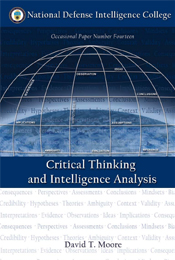
Government Book Talk got quite a bit of traffic for last Friday’s review of  Interrogation: World War II, Vietnam, and Iraq, so I thought it would be worthwhile to discuss another book just in from the National Defense Intelligence College. Critical Thinking and Intelligence Analysis is a study of the practice of critical thinking – which can be defined as simultaneously thinking and thinking about thinking as a means of an analyst “coming to a solution and improving the way her or she reasons.” Although the application of this reasoning technique to intelligence analysis is the focus of the book, the discussion of what critical thinking is, its advantages over either inductive or deductive reasoning, and its value in the analysis of a wide variety of problems and situations makes it a useful tool for academics, business people, or anyone else needing to analyze a particular scenario or set of evidence.

Because I’m not a heavily abstract thinker, I found the author’s case study very useful in getting a better handle on how the absence of critical thinking can result in a major intelligence failure. Prior to the Cuban missile crisis of 1962, American intelligence analysts had received so much false or exaggerated information on Soviet military activities – including reports of Mongolian and Chinese troops –  that they seemed to believe that any such reports had to be untrue. Disinformation on the part of the Soviets added to the analysts’ disinclination to think critically about the intelligence they were receiving, so the discovery of offensive Soviet missiles was a total surprise to them.  The book also draws analogies to the failure of intelligence during the lead up to the Iraqi invasion of Kuwait and in the 2002 failure to detect the absence of weapons of mass destruction prior to the second U.S. war with Iraq.

The verdict: an excellent textbook for the teaching of critical thinking (there’s a syllabus in the Appendix) and a very interesting take on a crucial episode in Cold War history. You can read it here and buy it here. To find it in a library, go here.


Just for Fun: The Nuttall Tick Catalogue

June 8, 2010

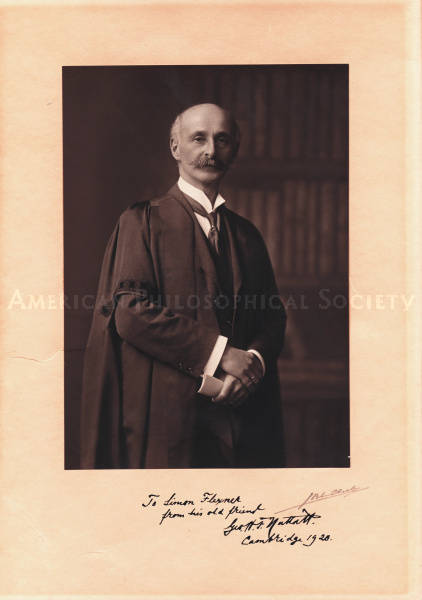
Okay, all of us here at Government Book Talk love our Government books, but we also know that some of them are…unusual. Sometimes a particular title becomes a sort of shorthand for the whole category of strangely and obscurely titled Federal documents. At one time, the book that summed up this exotic aspect of Government publications for my colleagues and me was the Nuttall Tick Catalogue – or to cite its more euphonious full title, George Henry Falkiner Nuttall and the Nuttall Tick Catalogue. In fact, just a few weeks ago I received an email from a former colleague (from Greece!) congratulating me on this blog and asking if I planned to do a post about the Tick Catalogue.

It’s the perfect oddity: as the Preface states, “”This publication brings up to date, in a slightly revised form, Nuttall’s ‘Catalogue of Ticks,’ a three-volume handwritten journal, never before published.” Given that Dr. Nuttall (pictured above) died in 1937 and that the Catalogue was not published by the U.S. Department of Agriculture (USDA) until 1984, it doesn’t seem as if the world was in a rush to see it in print.

A closer look does tend to bring things into focus. Dr. Nuttall himself had quite a distinguished career as a biologist, as well as a brief stint as a special constable during the aftermath of the San Francisco Earthquake. He was the founder of the journal Parasitology, and indeed of the field of parasitology, a leading researcher into the transmission of diseases by parasites, and the discoverer of the bactericidal properties of human blood. He concluded his career as Quick Professor of Biology at Cambridge University.

The editor of the Catalogue, J.E. Keirans, apparently is still active as a researcher. His specialties include ticks (of course) and the detective stories of John Dickson Carr (particular favorites of mine as well – I think The Three Coffins was his best).

I really can’t comment on the Tick Catalogue’s value as a scientific document but, given Nuttall’s very distinguished career, I’m convinced that USDA had good reason to make some of his work more widely available, albeit it was not the stuff of best sellers. Of course, that’s one of the noblest functions of Government publications – to make valuable information available regardless of how narrow a niche that knowledge may occupy. We also owe thanks to J.E. Keirans, who labored so diligently to bring the Catalogue to light.

I couldn’t find the text of George Henry Falkiner Nuttall and the Nuttall Tick Catalogue online, but a number of libraries do have it.

For more wildly and wonderfully titled Government publications, go here!


Government Gets Healthy

June 4, 2010


Government Book Talk presents its first guest blogger!

My name is Kelly Seifert. I’ve been with GPO for nine years, working on initiatives for the Federal Depository Library Program (FDLP). You may know me from the recent “GPO Takes to the Streets” promotional videos: http://www.fdlp.gov/outreach/promotionalresources/381-taketostreet. Most of my work centers on promoting the FDLP. I’m fascinated by the wide range of unique and intriguing Government documents out there and I’m always in search of interesting titles.

As I’ve heard more and more about the First Lady’s “Let’s Move” campaign to fight childhood obesity, I started to wonder what kinds of information resources were available from the Government on health and nutrition. It turns out there are plenty!

Thinking about childhood obesity, one document particularly stuck out. In 1995, the National Cancer Institute put out an educational game called, “Slam Your Way to Good Health by Eating Five Fruits and Vegetables a Day!” The game came with pop-out disks depicting healthy, tasty foods. Players took turns “slamming” or throwing down the disks and collecting the ones that landed face-up. What a neat way to teach kids about nutrition!

While currently out of print, you can easily access this game by visiting your local Federal depository library. Locate a library in your area here.

Looking at the Slam game made me curious to see what else was available from the Government on healthy living. What I found was pretty cool. There are resources available for all ages. Here are a few… 1) Healthy People 2010: Understanding and Improving Health, 2) Pocket Guide to Staying Healthy at 50+, 3) The Healthy Woman: A Complete Guide for All Ages, 4) Be Active Your Way: A Guide for Adults, and 5) MyPyramid: Steps To A Healthier You (Poster)…and the list goes on and on!

Learn more about “Let’s Move” at http://letsmove.gov/.


Prisoner Interrogation in Three Wars

June 3, 2010

Interrogation: World War II, Vietnam, and Iraq is an absolutely fascinating read. This book from the National Defense Intelligence College takes both an historical and policy-oriented view of prisoner of war interrogations in three wars. The World War II section examines the Army’s use of Japanese Americans – Nisei – as interrogators in the Pacific, along with incisive discussions of why Japanese soldiers seldom were taken prisoners, why a relatively high percentage of such POWs cooperated with their interrogators, and why they furnished such a significant amount of intelligence to their captors (the Japanese military hierarchy assumed that their men would not become prisoners and so did not indoctrinate them about the importance of not giving up information if they were.) This part of the book also analyzes the strengths and weaknesses of the Army and Navy Japanese language training  provided during the war.

The Vietnam section focuses on profiles of the most able interrogators in World War II (the wonderfully named R.W. G. “Tin Eye” Stephens for the British and Hans Scharff for the Germans) and a number of successful American officers during the Vietnam conflict. Throughout the book, the authors make the point that linguistic ability, a deep understanding of the captives’ culture and worldview, and a perception that torture or other violent methods were useless in soliciting information of value are the hallmarks of a successful interrogator of prisoners. This part of the book also describes these individuals’ occasional conflicts with the military bureaucracy, such as Sedgwick Tourison’s experience in reporting more information about the Tonkin Gulf incident than his superiors wanted to hear.

The final section, on Iraq, focuses on policy issues – specifically, whether Army doctrine should permit Special Operations personnel to interrogate prisoners. Again, real-world examples from personal experience provide a study that is both gripping and insightful.

Interrogation: World War II, Vietnam, and Iraq is a thoughtful and provocative analysis of what any army confronts in war – the need to gather intelligence from prisoners, the most effective way to do that, and the ineffectiveness of “harsh methods” in delivering useful information.

You can read the book here or get a copy from GPO here.  To find it in a library, search here.


The Constitution: Pocket and Otherwise

May 28, 2010

Last week a Capitol Hill paper did a piece on the popularity of the United States Constitution as a publication and one of the news services picked it up. Although those of us who work at the Government Printing Office think of the “Pocket Constitution” authorized by Congress as the classic printed version, many other organizations also print and distribute copies, as the article points out. At least one other Federal Government agency does its own edition of the Pocket Constitution: U.S. Citizenship and Immigration Services (USCIS), as part of its effort to encourage immigrants to become citizens. Like the congressional edition, this little booklet throws in the Declaration of Independence as well.

All of this made me curious about how many editions of the Constitution currently appear in Federal documents of various sorts. It turns out there are quite a few.

Note: This is a totally unscientific and partial survey based on what I found in our online bookstore.

For those who can’t get enough of the Constitution and its interpretation, there’s the Constitution of the United States of America: Analysis and Interpretation, published every 10 years or so and weighing in at an imposing 9 pounds, six ounces, not counting the supplements issued to keep it up to date.  If you can’t wait to start reading, you can find it here.

For those of us who like to contemplate history’s “might have beens,” you can’t do better than The Constitution of the United States of America as Amended; Unratified Amendments; Analytical Index, which, in addition to the text of the Constitution, details about the ratification of each amendment to the Constitution, and an exhaustive index, discusses six other amendments that were submitted to the states for ratification but not adopted. You can read them here and find out which unratified amendment was the only one actually signed by the President.

Naturally, the Constitution is also included in the procedural manuals of the Senate and the House of Representatives. And don’t forget Interpreting Old Ironsides: An Illustrated Guide to the USS Constitution – oh, wait, that’s a different kind of vessel of democracy.

I think I’ve made my point, and I haven’t even touched on everything in our online bookstore, let alone what you could find through the vast resources of the Federal Depository Library Program. Maybe someone can put a list together before the Fourth of July…


Notable Documents 2009: Walter Reed

May 27, 2010

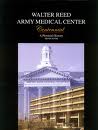
School kids used to learn that, in the aftermath of the Spanish-American War, Walter Reed helped to discover that yellow fever was transmitted by mosquitoes. Many of us have heard of “Walter Reed Hospital” as a place where for many years Presidents and wounded warriors alike have received medical care. What I didn’t realize is that Major Reed died only a year after he left Cuba. His friend Major William C. Borden, head of the Army General Hospital, was so devastated by Reed’s death that he worked for years to raise funds for a new hospital to be named after his friend. Walter Reed General Hospital opened in May 1909 and, as Walter Reed Army Medical Center, celebrated its centennial last year.

Walter Reed Army Medical Center Centennial: A Pictorial History, 1909–2009, one of Library Journal’s 2009 Notable Government Documents, provides both text and photos of this remarkable institution. Of course, the emphasis is on the treatment of armed forces personnel, not Presidents; the latter appear as visitors, not patients, as do Bill Cosby, Roy Rogers and Dale Evans, Bob Hope (twice) and others. The real focus is on regular GI’s being cared for and undergoing rehabilitation. I was interested to learn that occupational therapy was a part of Walter Reed’s activities from its earliest days. Some of the photos are grim, depicting the struggles of seriously wounded GIs to regain use of their limbs or learn to use prosthetic ones. There are also numerous shots of construction as Walter Reed expanded over the years.

The verdict: A part of military history that all of us should remember, far from the parades and worth thinking about as we approach the Memorial Day weekend.

You can find Walter Reed Army Medical Center Centennial: A Pictorial History, 1909–2009 here, or locate it in a library here.