Understanding America’s Longest War

May 25, 2012

Memorial Day in the United States is a time to remember those members of the military who have died in service to our country.  Originally known as Decoration Day, this federal holiday originated after the American Civil War to commemorate the fallen Union soldiers as widows would turn out to decorate the graves.

In fact, as I write this, all available members of the 3rd U.S. Infantry Regiment, also known as The Old Guard, are a just a mile away from GPO headquarters at Arlington National Cemetery, planting over 280,000 small U.S. flags—one at each grave marker— that will stay in place just for Memorial Day weekend, carrying on an annual “Flags In” tradition started in 1948.

Image: “Old Guard” soldier and son place flags in Arlington Cemetery during “Flags in”, Memorial Day 2008. Source: Arlington Cemetery FlickR

Remembering—and understanding—the war in Afghanistan

Many on this day take the time to reflect on the various military missions that resulted in the losses of brave service men and women, with our current war in Afghanistan offering the most recent opportunity for reflection.

A master at providing this analysis is Joseph J. Collins, author and professor at the National War College, who wrote the new book from the National Defense University called “Understanding War in Afghanistan” in order to provide military leaders, civil servants, diplomats, students and civilians the lessons in history of war and strife in that troubled nation.

Thoughtful questions, thought-provoking answers

Collins asks—and answers—a number of thought-provoking questions about the current war in Afghanistan:

  1. How did the United States and its allies get to where they are today?
  2. How can that coalition understand the many wars in Afghanistan over the past 33 years?
  3. How should it define its interests today?
  4. How can this coalition of nearly 50 nations help to bring this war to an end?

To answer these questions, Professor Collins provides both historical background and analysis to put it into context, finishing with a look towards possible next steps:

  • Chapter 1- Afghan history and culture:  Says Collins, “It is important to first examine the land, [the Afghan] people, and their culture.
  • Chapters 2 through 5- Prior wars: Next, Collins reviews the war-fraught Afghan history, the Soviet-Afghan War and the conflicts that followed it, including their Civil War, the rise of the Taliban, their role in 9/11, and the first war against the Taliban government.
  • Chapter 6- Insurgency: This chapter helps us “understand the basic theory and concepts that underpin Afghan counterinsurgency in the 21st century”.
  • Chapter 7 & 8- 2nd War against the Taliban, Rebuilding and the Surge: These chapters enable us to comprehend what happened during 2002-2010 as the coalition attempted to fight the Taliban while rebuilding this battle-weary land.
  • Chapter 9: – Assessment and Options:  Collins completes his book with a frank assessment of the “potential choices that national leaders face for the future” in Afghanistan.

Enduring lessons and legacy of Operation Enduring Freedom

Now in its twelfth year, the Afghanistan War is the longest war in U.S. history, surpassing even the Vietnam War.  Operation Enduring Freedom, with over 1,892 fallen servicemen and women just from the United States and over 1,000 casualties from other nations who form part of the coalition, is in the minds of many this Memorial Day.

Following the mantra of Spanish born American philosopher and writer George Santayana who wrote “Those who do not learn from history are doomed to repeat it,” Understanding War in Afghanistan helps provide us the basis to learn the lessons of history in this particular conflict in order to inform our future course.

Dan Caldwell, Distinguished Professor at Pepperdine University, agrees, saying of Professor Collins’ book:

“This is the required text for ‘Afghanistan 101’—a primer that skillfully explains the realities of a complicated country and America’s longest war. It is written in a clear, informative way that is accessible to citizens, students, and civilian and military personnel who want or need to learn more about one of the most important issues of our time.”

What better way to remember those who have fallen in Afghanistan than to learn about the cause for which they sacrificed all?

How Do I Obtain Understanding War in Afghanistan?

  • Buy it online 24/7 at GPO’s Online Bookstore.
  • Buy it at GPO’s retail bookstore at 710 North Capitol Street NW, Washington, DC 20401, open Monday-Friday, 9am to 4pm, except Federal holidays, (202) 512-0132.
  • Find it in a library.

About the Author:  Michele Bartram is Promotions Manager for GPO’s Publication and Information Sales Division and is responsible for online and offline marketing of the US Government Online Bookstore (Bookstore.gpo.gov) and promoting Federal government content to the public.


Four Decades since Détente and SALT

May 18, 2012

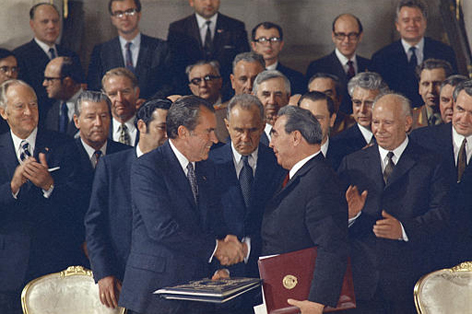
Forty years ago next week marked a historic point in Soviet-American relations. On May 22, 1972, President Richard Nixon landed in Moscow for an unprecedented week-long summit with Soviet leader Leonid Brezhnev, Premier Alexei Kosygin and other Soviet officials that culminated in the SALT I Treaty and marked the height of the détente era.

In honor of this four decade anniversary, I thought I’d write about an insightful publication by the State Department entitled “Soviet-American Relations: The Détente Years, 1969-1972 that covers this important period that marked a détente or a “thawing” of Cold War relations between the two superpowers.

Extremely interesting are the forewords by both Nixon’s Secretary of State Henry Kissinger and Soviet ambassador Anatoly Dobrynin. In them, they talk about their personal relationship that forged “The Channel” of communications between the two governments that finally led to the breakthrough in negotiations.

Kissinger reminisces:

On March 25, 1971, according to the transcript of a telephone conversation with Soviet ambassador Anatoly Dobrynin, I remarked: “When we are both out of government service, which will be a lot later for you than for me, I hope you will let me read the reports you send in on me.” … My remark to Dobrynin was an interlude in what evolved into almost daily exchanges. What was later named “The Channel” began as a general exchange of views. Starting in 1971, the Channel became the principal venue for U.S.-Soviet relations.

Don’t change “The Channel”  

According to Kissinger in “The Détente Years”, “The Channel” became one of the pathways of change, and “produced a number of significant agreements”, including:

  • an agreed approach on Strategic Arms Limitation (May 1971);
  • the conclusion of an agreement regarding access to Berlin (September 1971);
  • the announcement of a Soviet-American summit agreement (October 1971); and
  • President Nixon’s visit to Moscow (May 1972), at which agreements, the most important of which were a treaty regulating Ballistic Missile Defense and a five-year freeze on deploying additional offensive strategic weapons, were concluded. The two sides also published an agreed statement on principles of international conduct.

Image: Nixon and Brezhnev shake after signing the SALT treaty on May 26, 1972 (Source: Corbis Images).

Pass the SALT, please

The highlight of the publication is the discussion about the lead-up and issues during the Moscow Summit and the final negotiations of the SALT I Treaty.

SALT I, the first series of Strategic Arms Limitation Talks, had begun in November 1969 to explore ways to halt or reduce the arms race, particularly nuclear weapon proliferation. This week of meetings from May 22 to 26, was set up after those years of negotiations to finalize and sign a number of agreements that increased cooperation and reduced the mutual nuclear threat between the two nations.

Image: Nuclear Limits. (Source: Time Magazine, 1972)

On May 26, Nixon and Brezhnev signed the Strategic Arms Limitation Treaty (SALT I), the most significant of the multiple agreements reached during the Moscow summit. The terms of the SALT treaty limited the USSR and the United States to only 200 anti-ballistic missiles each, which had to be split between two defensive systems.

One good (hand)shake leads to another

Among all the handshakes at this Moscow summit was another for the “Agreement between the Government of the United States of America and the Government of the Union of Soviet Socialist Republics on Cooperation in the Fields of Science and Technology” which laid the groundwork for the first joint Soviet-US space flight. Called the Apollo Soyuz Test Project or ASTP, the ASTP flight lasted only nine days from July 15-24, 1975, but led to another famous handshake… this time in space.

Image: Photo of the famous handshake between Astronaut Thomas P. Stafford (f.g.) and cosmonaut Aleksei A. Leonov after a successful linkup in space of the Americans’ Apollo and the Soviets’ Soyuz spacecrafts on July 17, 1975  (Source: NASA ASTP gallery).

Innovation = Bureaucratic dismay

All in all, this publication provides unique insights from the players involved about the diplomatic communications and procedural changes and innovations that were put in place on both sides to eliminate the logjam in relations between Soviets and American administrations since the end of World War II. And sometimes these changes were done “outside” the normal processes.

As Kissinger explains in the book:

Paradoxically, the Channel worked best so long as the bureaucracy did not know of its existence. While that was the case, the participants in the interdepartmental machinery had an incentive to adjust their positions toward what they thought was feasible; in general, no one wanted to assume responsibility for failure by inflexibility…

For all the bureaucratic dismay it caused, the Channel was an innovative attempt to transcend the formalities of an increasingly bureaucratized diplomacy. It helped contain crises, saw America through a period of domestic divisions and sketched prospects for a more peaceful world.

HOW DO I OBTAIN “Soviet-American Relations: The Détente Years, 1969-1972”?

  • Buy it online 24/7 at GPO’s Online Bookstore.
  • Buy it at GPO’s retail bookstore at 710 North Capitol Street NW, Washington, DC 20401, open Monday-Friday, 9am to 4pm, except Federal holidays, (202) 512-0132.
  • Find it in a library.

About the Author:  Michele Bartram is Promotions Manager for GPO’s Publication and Information Sales Division and is responsible for online and offline marketing of the US Government Online Bookstore (Bookstore.gpo.gov) and promoting Federal government content to the public.


War Games

May 11, 2012

Our Guest Blogger—GPO’s Public Relations Specialist  Emma Wojtowicz—takes a look at the U.S. Naval War College publication on war gaming.

This recently reprinted publication from 1966 has not only been reborn, but has also received a face lift to make it look like the relevant book it still is today. Do not let its age fool you.

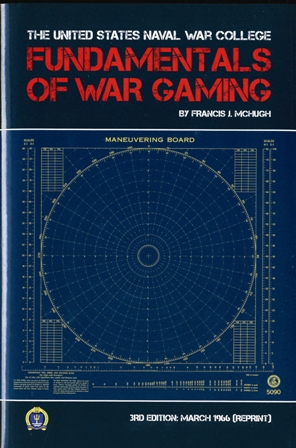
Fundamentals of War Gaming is a third edition reprinted publication by the United States Naval War College that explores the history and practice of war gaming.

To put it simply, war gaming is like the game of chess. This book applies the chess board to war scenarios exposing readers to the fundamentals of war gaming. Chess pros learn how their skills can be adapted to conceptualize military operations and novices receive an introduction on the theories and practice of war gaming.

War gaming is more prevalent in today’s society than one might think and I am not talking about war-related video games.

A few examples include:

  • The recent one year anniversary of the death of Osama bin Laden reminds us of the news coverage from last year that detailed the way Navy Seals prepared for the mission. Creating a replica of bin Laden’s compound and practicing and simulating different scenarios is the practice of war gaming.
  • For fans of the Hunger Games books and movie, the hunger games tributes strategize how to use the skills to eliminate their opponents and the game makers use their futuristic technology to manipulate the tributes to do and go where they want them and that is war gaming.
  • Perhaps the best example of war gaming is in an episode of the television series the West Wing. President Bartlett is playing chess with Sam Seaborn and he equates the game of chess to a military situation that he is confronting in the Taiwan Strait. President Bartlett repeats, “see the whole board,” “look at the whole board” which is crucial when playing the game of chess and when strategizing for diplomatic and military situations or war gaming.

Figure: 1st Battalion, 5th Marines in Iraq with giant chess set. — 8 October 2005. Source: SoldierChess.org, a charity that sends free chess sets to deployed troops

History and popular culture has familiarized us with the concept of war gaming, but the publication Fundamentals of War Gaming provides a broader picture. Before World War II, the Naval War College relied on manual games such as chess and other board games to train and prepare officers.

One chapter in the book is dedicated to the history of chess and war gaming focusing on the use of war gaming by individual countries as well as the Naval War College. World War II and the various types of warfare used during the war led to the need for more sophisticated ways of training.

The development of computers, in as early as the 1950s, changed the war gaming methods from manual to simulated gaming using NEWS, or the Navy Electronic Warfare Simulator.


Image: NEWS or Navy Electronic War Simulator. Source: Defence Talk

Fundamentals of War Gaming contains various charts and graphs depicting the statistical methods of war gaming and also historic photographs showing the evolution of war gaming from life-size chess boards to giant computer simulators.

This well-rounded portrayal of war gaming appeals to a large audience from math-oriented chess fans to history buffs. It may be an older publication, but it is still an interesting read and relevant today. Like I said, don’t let its age fool you.

HOW DO I OBTAIN THIS “The United States Naval War College Fundamentals of War Gaming”?

  • Buy it online 24/7 at GPO’s Online Bookstore.
  • Buy it at GPO’s retail bookstore at 710 North Capitol Street NW, Washington, DC 20401, open Monday-Friday, 9am to 4pm, except Federal holidays, (202) 512-0132.
  • Find it in a library.

Uncle Sam wants to help you… get a job

May 4, 2012

If you are one of the millions of Americans hunting for a job, the U.S. Government wants you… to be prepared for the job search.

According to figures released by the Bureau of Labor Statistics on April 10, 2012, called “Job Openings and Labor Turnover – February 2012”, the number of job openings has been climbing:

The number of job openings in the United States in February 2012 was 3.5 million…  Although the number of job openings remained below the 4.3 million openings when the recession began in December 2007, the number of job openings has increased 46 percent since the end of the recession in June 2009.

Image: Uncle Sam: “I want you to get a real job” poster. Source: SF Weekly

And today’s numbers from the Labor Department showed that the U.S. economy added 115,000 jobs in April while the unemployment rate fell to 8.1 percent.

Together with graduating college and high school seniors, this makes this a prime time for many Americans to start or re-start their job search.

Fortunately, the Federal Government has produced a number of helpful job and employment publications and resources to help you find that job, from researching careers, industries and salaries, to preparing resumes, writing cover letters and honing your interviewing skills.

Step 1: Identify the Right Career for You

Many job hunters have had to leave their original profession due to changes in the marketplace. To help them identify what types of jobs are out there and what skills are needed, here are some Federal publications:

  Occupational Outlook Handbook, 2010-11 (Paperback)
The must-have book for every career counselor, The Occupational Outlook Handbook is exceedingly useful for job hunters, particularly those who are changing careers or in an industry that is undergoing transition. It describes about 250 occupations in detail, covering what the types of tasks workers do on a particular type of job, the working conditions, the training and education needed, earnings, and expected job prospects.
  High-Earning Workers Who Don’t Have A Bachelor’s Degree
This publication is still valid today, as it reviews occupations that earn relatively high salaries without requiring expensive college degrees. Ranges from accountants, to plumbers and electricians, repair people and mechanics, registered nurses and health technicians, managers and supervisors of all types, and more. Gives percentages of these that do not have bachelor’s degrees and typical weekly earnings (circa 1999).

Additional information on job training can be found at CareerOneStop’s Explore Careers section.

Step 2:  Determine Whether You Should Get Additional Education and Training

Many job seekers need to acquire new skills or update their existing skills to become or stay competitive. These publications talk about the value of training

  What It’s Worth: Field of Training and Economic Status in 2001
If you’ve ever doubted the value of education on your earning potential, the Census Bureau assembled these figures on what additional training is worth to one’s economic status and earnings.
  Apprenticeships: Career Training, Credentials, and a Paycheck in Your Pocket
Some professions require going through apprenticeship training. This publication explains how apprenticeship works, listing apprenticeable occupations, and the years of training estimated for each occupation.

Additional information and resources about job-related education and training can be found at CareerOneStop’s Education & Training section.

Step 3: Preparing Your Work Credentials and Interviewing Skills

The next step is to hone your credentials and interviewing skills for the active job search. The following excellent publications and resources will help you ensure you put your best foot forward.

  Resumes, Applications, and Cover Letters
With this update of a popular publication, you will find out the best ways to present your credentials to prospective employers. Illustrations include a sample chronological resume, a sample functional resume, and a sample cover letter. The ‘for more information’ section lists some useful, established websites that contain advice about 21st century job hunting and resume writing.
  Getting Back to Work: Returning to the Labor Force After an Absence
Many job seekers today have what is called an imperfect employment history due to layoffs, underemployment or other career gaps. This publication helps these returning workers know what to do and what to expect when returning to the labor force can help ease the transition back to work. Part 1 offers tips on how to identify, and prepare for, your ideal job. Part 2 helps you get set for the workforce. Part 3 suggests ways to maintain work-life balance. In sidebars throughout the article, you’ll find suggestions for some special re-entry situations as well as lists of additional resources.
  Employment Interviewing: Seizing the Opportunity and the Job
This booklet gives useful advice on what to do before, during, and after a job interview to help you get that job. It also includes tips about job fairs.

Additional information and resources about resumes, interviewing and job-related education and training can be found at CareerOneStop’s Resumes + Interviews section.

Step 4: Start Your Job Search

Federal Government Jobs:

A useful publication for anyone seeking to apply for a Federal government job is “How to Get a Job in the Federal Government”. Read our previous blog post about this publication, entitled “Information about Getting a Federal Government Job”.

Once you are ready to apply, you can find all current Federal jobs openings on the Federal job site, USAJobs.gov.

Private Sector and State Government Jobs:

Information and resources about where and how to conduct your job hunt can be found at CareerOneStop’s Job Search section.

Step 5:  Research Typical Salary and Benefits

Hopefully, at this point you are receiving job offers and negotiating salary and benefits. These Federal publications can give you some ballpark figures of salaries for various occupations as well as unemployment laws in different states.

  National Compensation Survey: Occupational Earnings in the United States, 2006
This Multimedia booklet and CD-ROM report on earnings for occupations common to a wide variety of establishments. Coverage includes office clerical, professional and technical, maintenance, custodial and material movement occupations.
  Occupational Employment and Wages, 2006
This guide provides occupational employment and wage data from across the United States.
  Employment and Wages Annual Averages, 2005
This Multimedia booklet and CD-ROM present 2005 employment and wages data as defined in the North American Industry Classification System. Data pertain to workers covered by State unemployment insurance laws and the Unemployment Compensation for Federal Employees (UCFE) program in all 50 States, the District of Columbia, Puerto Rico, and the Virgin Islands.
  Comparison of State Unemployment Insurance Laws, 2005
This valuable publication provides state-by-state information on workers covered by unemployment insurance, benefit eligibility, methods of financing, and other areas of interest in the unemployment insurance program

More information and resources about salary and benefits can be found at CareerOneStop’s Salary + Benefits section and the Publications section of the Bureau of Labor Statistics website.

Other Federal Job Hunting Resources:

  • Occupational Outlook Quarterly – This periodical subscription service offered by the Government Printing Office is issued quarterly by the US Department of Labor Bureau of Labor Statistics and provides current information on employment trends and outlook, supplementing and bringing up to date information in Occupational Outlook Handbook.
  • CareerOneStop: The Labor Department has created an excellent website for American job seekers. Called CareerOneStop.org, this job hunting portal helps you find the information and resources you need about careers, training, educational financial aid, job banks and more.
    • It also has a Service Locator to help all job seekers and the unemployed find Federal, state and local employment resources in your area.
    • Veterans now can find job-hunting help at their Veterans ReEmployment initiatives section.

How Can I Obtain the Publications Mentioned in this Post?  

About the Author:  Michele Bartram is Promotions Manager for GPO’s Publication and Information Sales Division and is responsible for online and offline marketing of the US Government Online Bookstore (Bookstore.gpo.gov) and promoting Federal government content to the public.