Vote for the top Government news story of 2011

December 26, 2011

2011 was a momentous year in Federal Government-related news and as such, it was a banner year for important Government publications, as demonstrated by our 2011 Year in Review collection available from the U.S. Government Printing Office (GPO).

But which Government news story was the most significant, in your opinion? Vote in our poll below, and then see the publications that follow that relate to these important stories:

Note 1:As of January 27, 2012, this poll is NOW CLOSED with the final results showing above, but feel free to click on the SHARE THIS link to pass on the results to others.
Note 2: This is a non-scientific user poll. Results are not statistically valid and cannot be assumed to reflect the views of the Government Printing Office customer as a group or the general population.

Following are the Federal Government publications that relate to each of these important 2011 stories:

2011 News Story   Related Federal Publication(s)
9/11 tenth anniversary   Ten years have passed since that tragic day, but the memories are still strong. 2011 saw some excellent publications about that day, including a 10th anniversary edition of Pentagon 9/11 and a reprinting of the 9/11 Commission Report, all of which you can find in our 9/11 Collection: A Decade of Remembrance.

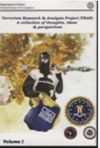
Assassination of Osama bin Laden  FBI Terrorism Research and Analysis Project (TRAP) A Navy SEALS team located and killed Osama bin Laden this year, the mastermind behind the 9/11 attacks and many other Al Qaeda and insurgent terrorist attacks. This 2011 publication, Terrorism Research and Analysis Project (TRAP): A Collection of Research Ideas, Thoughts, and Perspectives, V. 1analyzes causes and possible responses to terrorism as presented at the FBI Terrorism Research and Analysis Project (TRAP) Symposium of international academics and law enforcement personnel.

Death of North Korea’s Kim Jong Il   The recent death of North Korea’s leader, Kim Jong Il, marks an uncertain time for the Korean Peninsula and the entire region. North Korea: A Country Studyreviews the history and the dominant social, political, economic, and military aspects of contemporary North Korea before this.

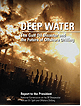
Deep Water BP Gulf oil disaster report  Deep Water: The Gulf Oil Disaster and the Future of Offshore Drilling, Report to the President, January 2011 In January of this year, the National Commission on the BP (British Petroleum) Deep Water Horizon Oil Spill and Offshore Drilling released its controversial Deep Water: The Gulf Oil Disaster and the Future of Offshore Drilling, Report to the President, January 2011. This best-selling publication offers the fullest account available of what happened in the Gulf of Mexico on April 20, 2010 and why, and proposes actions, changes in company behavior, reform of government oversight, and investments in research and technology that will be required to avert future disasters.

End of the war in Iraq  Battleground Iraq: Journal of a Company Commander There is an interesting White House timeline about the Iraq war at the end of which is a link to the Joining Forces initiative with which one can express one’s support for the troops. GPO’s bookstore has a number of books about Iraq, but two stand out as best-sellers. Battleground Iraq: Journal of a Company Commander gives a realistic account by Major Todd Brown of his experiences as a U.S. Army company commander in Iraq from April 2003 to March 2004. Hard Lessons: The Iraq Reconstruction Experienceexamines the Iraq reconstruction experience, and provides 13 take-away lessons for future contingency relief and reconstruction operations.

  • Buy them in our online bookstore:

a)      Battleground Iraq: Journal of a Company Commander

b)      Hard Lessons: The Iraq Reconstruction Experience

Japan earthquake and tsunami  Field Operations Guide for Foreign Disaster Assessment and Response Natural disasters were big in the news this year, and the Federal Government was involved in responding to them, from the National Guard in the U.S. to foreign response teams overseas. For example, in response to the tragic earthquake and resulting tsunami and nuclear reactor problems in Japan, the U.S. Agency for International Development (USAID), deployed a Disaster Assistance Response Team (DART) that included disaster response experts, urban search and rescue teams, and nuclear experts from the U.S. Department of Energy, Department of Health and Human Services, and the Nuclear Regulatory Commission. The Field Operations Guide for Disaster Assessment and Responseis used by USAID’s Office of U.S. Foreign Disaster Assistance (OFDA) for DART teams and other disaster assistance personnel when responding to foreign disasters like the Japan situation.

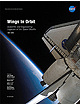
Last Space Shuttle flight  NASA and Space Shuttle publications including "Wings-in-Orbit" 2011 marked the end of NASA’s three-decade long space shuttle program when, on July 21, the final space shuttle mission ended with the shuttle Atlantis rolling to a stop at its home port, NASA’s Kennedy Space Center in Florida. NASA has published a number of terrific books about the program which you can find in our NASA and Space Shuttle Publications, along with a new set of beautiful color bookmarks, one for each shuttle and the best-selling Wings in Orbitbook.

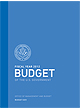
U.S. economy and the Federal budget  Books about Government and Politics, including the Federal Budget and the Economy It seems every newscast this year has covered the US economy, Federal Government budgets and deficits and differing opinions about options to address them. You can find the President’s original budget submission published this year and subsequent analyses and responses to it in our collection of Books about the Government and Politics, including the Federal Budget and the Economy.

How can you find even more Federal Government publications? We have assembled many collections of Federal publications on our year-round Gift Guide and in our Special Collections page on GPO’s online bookstore.

About the Author: Michele Bartram is Promotions Manager for GPO’s Publication and Information Sales Division and is responsible for online and offline marketing of the US Government Online Bookstore (Bookstore.GPO.Gov) and promoting Federal government content to the public. 


The National Guard turns 375… and is still going strong

December 13, 2011

Guest blogger Emma Wojtowicz discusses a milestone for the United States National Guard.

Today the U.S. National Guard celebrates its 375th anniversary.

On December 13, 1636, the Massachusetts Bay Colony General Court issued a declaration that all able-bodied men between the ages of 16 and 60 were required to join the militia to defend against enemy attack and protect the settlements.

Image: The First Muster in 1637 took place after the December 13, 1636 Massachusetts General Court declaration established three regiments of “citizen soldiers” within the colony to defend against enemy attack and preserve villages established in the colony per English militia tradition. Source: “The First Muster” painting by Don Troiani.

Now, 375 years later, the National Guard still has the same mission and is an important part of the fabric that defends our country. The National Guard’s motto “Always Ready, Always There” is embodied in its founding when militias protected the colonies and today as the National Guard protects U.S. citizens at home and abroad.

In honor of this momentous occasion, the Government Printing Office has assembled a collection of National Guard publications, from history to present-day operations.

The National Guard and the War on Terror: Operation Iraqi Freedom is the third book in a series published by the National Guard Bureau about the National Guard’s role in major events from the first decade of the 21st century, including the terrorist attacks on September 11, 2001, Hurricane Katrina, the War in Afghanistan, and the Iraq War.

Operation Iraqi Freedom focuses on the early years of the Iraq War – the National Guard’s largest commitment of combat personnel since World War II.  Weaving together personal narratives, photographs, charts, and maps, the book tells the story of the Iraq War from the perspective of the National Guard’s citizen-soldiers and airmen and their role in the war from the lead up to war after the September 11, 2001 terrorist attacks to 2006 before the troop surge.

Operation Iraqi Freedom stresses that the National Guard has had a hand in every aspect of the United States’ engagement in Iraq from strategy and combat to stabilizing, training, and rebuilding the country. The author is very thorough in his explanations of conflicts and does not shy away from portraying the realities of war. Image: Never Forget! painting by Larry Selman shown in the Operation Iraqi Freedom book.

The book’s perspective rotates through National Guard units from various states detailing their missions and conveying to readers the national effort and representation of troops who are serving overseas. Operation Iraqi Freedom concludes with an “In Memoriam” tribute to members of the National Guard who have lost their lives during the Iraq War and a brief chronology of the war during the time period of the book from January 2002 to December 2006. These two closing features put the war in perspective considering other branches of the United States military that are also engaged in the Iraq War.

For 375 years, the National Guard has played a vital role in protecting the United States, which is illustrated in Operation Iraqi Freedom. This new role of supporting the other armed forces overseas in combat “warfight” missions is relatively new, but its other roles of homeland defense and security, emergency response here and abroad,and other domestic support missions are well-known and much appreciated by generations of Americans for the past 375 years.

Image: Varied missions of the National Guard. Source: National Guard Website Image Gallery

The National Guard’s almost four centuries of service is being recognized at the highest levels. It is important to note that on Monday, November 28, the U.S. Senate approved an amendment to the defense spending bill that– if passed in the final version by both houses–  would elevate the National Guard chief to the Joint Chiefs of Staff, joining the leaders of the Army, Navy, Air Force and Marines at the highest level of military and defense strategy.

Image:  DAKOTA DUNES, S.D. – A crew of Airmen with the 114th Fighter Wing of the South Dakota Air National Guard carefully place sandbags along a retaining wall where heavy equipment could not be used to reinforce the levee here on June 5, 2011. The Airmen are working alongside Army National Guard Soldiers to provide critical support to flood prevention operations as the Missouri River reached critical flood levels. Source: South Dakota National Guard; Photo by Sgt. Charlie Jacobson

How can you get The National Guard and the War on Terror: Operation Iraqi Freedom?


Digging Deep to Improve Mine Safety

December 8, 2011

A year ago April, America suffered its worst mining disaster in 40 years with the explosion at Massey Energy’s Upper Big Branch mine in West Virginia on April 5, 2010 that resulted in the death of 29 coal miners.

Image: Breaking news alert about mine explosion on April 5, 2010. Source: KATU TV.

This past Tuesday, December 6, 2011, the Mine Safety and Health Administration (MSHA) issued its final report on the causes of this tragedy.

Entitled “Report of Investigation: Fatal Underground Mine Explosion April 5, 2010”, the report reiterated earlier conclusions that blamed Massey Energy management for what MSHA investigators called total “systematic, intentional, and aggressive efforts to avoid compliance” with mine safety law.

Image: Kevin Stricklin, Administrator for Coal Mine Safety and Health, for the Mine Safety and Health Administration (MSHA), announcing the final report on the Upper Big Branch Mine disaster. Source:  http://articles.boston.com/

The report found that the accident was entirely preventable, but that deliberate actions by the company and inexplicable oversights and decisions by the Federal inspectors led to the tragic consequences.

Some of the more egregious issues cited in the report include:  falsifying records and keeping two sets of books; failure to perform examinations; failure to identify, record or correct obvious hazards; inadequate training; a culture of intimidation of the miners; allowing methane to accumulate without proper ventilation in place; and Federal investigators giving the company advanced notice of upcoming inspections.

Additional investigations are under way about MSHA’s role in this disaster as well.

History repeats itself…unfortunately

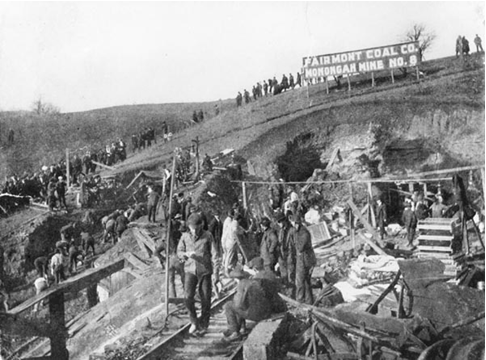
The December 6 date for the announcement of the Upper Big Branch report is significant since it marks the 104th anniversary of Monongah, the worst mining disaster in U.S. history in which 361 men and boys in West Virginia lost their lives, leaving over 250 widows and 1000 children without support.

Image:  Monongah Mine catastrophe, December 6, 1907. Source: West Virginia Division of Culture and History

Sadly, reports about the causes of the Monongah Mine explosion eerily echo the Upper Big Branch report’s findings, says Boise State history professor Dr. Nick Casner:

Thirteen days after the [Monongah Mine] accident, an official Federal government report on mining accidents and deaths was released. On December 19[, 1907,] The New York Times reported that the government document said the number of accidents due to mining explosions had steadily increased and the cause of these accidents were often caused by of “lack of proper and enforceable mine regulations.”

Does the punishment fit the crime? Were these violations even considered crimes?

The publishing of the final Upper Big Branch report this past Tuesday coincided with the announcement by U.S. Attorney Booth Goodwin, that the Federal Government had reached one of the largest mine disaster settlements ever—a $209 million civil and criminal settlement—with the company that bought Massey Energy earlier this year, Alpha Natural Resources. The settlement protects Alpha executives from prosecution, but not Massey management, 18 of which to date have refused to be interviewed by federal investigators, invoking their Fifth Amendment rights.

Image: Massey Energy Co. Chairman and CEO, Don Blankenship, second from right, attends a press conference with board directors, from left, Robert Foglesong, Bobby Inman, and Stanley Suboleski, Monday, April 26, 2010, in Charleston, W.Va. Source: Jeff Gentner, Associated Press.

However, a number of industry watchdog groups say that the current relatively weak mining safety laws may make it difficult for the Government to prosecute the people who ran Massey.

Why? Because under the current federal mine act, safety violations are only categorized as misdemeanors, with the exception of falsification of records.

How to prevent it from happening again… Congress explores solutions.

Families of this and other mining disasters as well as concerned citizens are asking what can and is being done to prevent this sort of tragedy from occurring again and killing more miners.

Image: Tuesday, April 5, 2011. Mine helmets and painted crosses at the entrance to Massey Energy’s Upper Big Branch coal mine in Montcoal, W.Va. serve as a memorial to the 29 coal miners who were killed in an explosion at the mine a year before. Source: MSNBC.com

On May 4 of this year, the U.S. House Education and the Workforce Committee held a hearing by its Subcommittee on Workforce Protections about “Modernizing Mine Safety.”

This hearing came about, according to Subcommittee Chairman Rep. Tim Walberg (R-MI), because:

[W]e want to determine whether these changes [proposed by the MSHA] will produce the safety results we hope to achieve. That is why the testimony from today’s witnesses is so important. Our witnesses have more than 100 years of combined mine safety experience, and their professional expertise and personal knowledge will help inform Congress about the current state of mine safety enforcement, whether MSHA – in their opinion – is on the right track, and what other tools are needed to safeguard the health and well-being of miners.

One of these witnesses, Cecil E. Roberts, President United Mine Workers of America, gave some examples in his testimony of problems with current MSHA criminal penalties, enforcement and advance notice of inspections:

In addition to needing more—and more up-to-date – equipment, MSHA’s enforcement tools should also be modernized. For example, MSHA’s criminal penalties have been so insignificant that they have not served to deter unlawful conduct.

In order to allow inspectors to observe actual mining practices, Congress mandated that MSHA’s periodic inspections be conducted on an unannounced, surprise basis. Therefore, it has been against the law for anyone to give advance notice of MSHA inspections. Yet, as we have learned from the Upper Big Branch investigation and the indictment the Assistant US Attorney issued against Hughie Elbert Stover, the head of security for Performance Coal Company, Mr. Stover regularly and continually used signals to give advance notice of MSHA inspections.

Miners from Upper Big Branch have also reported that they were directed to and did change their mining practices, making short-term adjustments only when they learned that government inspectors were coming to a section to inspect. 

How do I learn more about mine safety issues?

One of the more interesting and important roles the Government Printing Office has is to transcribe and formally publish the details of Congressional hearings such as these. Reading the testimony from mine safety experts and others in the mining industry gives some fascinating details about and insight into a world few of us get to see: from boardrooms high in office towers to deep underground, where mining operations are either decided or executed.

You can get your own  copy of the May 4, 2011, Mine Safety Hearing testimony by the following methods:

  • Purchase a printed copy of the Modernizing Mine Safety Hearing, May 4, 2011” testimony, contact GPO via one of the methods below, asking for GPO Stock Number 552-070-43024-5:
    • Mail your request for this publication to: U.S. Government Printing Office, Main Bookstore, 710 N. Capitol St., Washington, DC 20402-9315
    • Call toll-free 866-512-1800; or 202-512-1808 (DC metro area or international)
    • Fax 202-512-1355
    • E-mail mainbks@gpo.gov
    • Online:  Note: This item cannot be ordered online.
  • Find it on GPO’s FDSys document archive database.

Other Related Federal Publications about Mine Safety:  Additional official publications about mine safety laws and enforcement actions can be found on our online bookstore.

  • Amended Mine Act, Procedural Rules, and EAJA Rules  – This publication contains the updated version of Title I of the Federal Mine Safety and Health Act of 1977 (Mine Act) integrated with the provisions of the Mine Improvement and New Emergency Response Act of 2006 (MINER Act), and the Commission’s procedural and Equal Access to Justice Act rules.

About the Author:  Michele Bartram is Promotions Manager for GPO’s Publication and Information Sales Division and is responsible for online and offline marketing of the US Government Online Bookstore (Bookstore.gpo.gov) and promoting Federal government content to the public. Several generations back, some of her relatives came from the hard-working, coal-mining country around Huntington and Bartram, West Virginia.


In FRUS We Trust: 150 Years of US Foreign Relations History

December 2, 2011

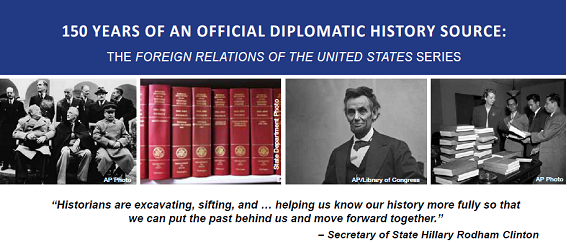
December 3, 2011, marks the 150th anniversary of the Foreign Relations of the United States (FRUS) series. The FRUS series, which is produced by the State Department’s Office of the Historian, was first published in 1861 in the same year that the Government Printing Office was founded and is the official documentary history of U.S. foreign policy decision-making and major diplomatic activity. Researchers and students of foreign policy have relied on the series to provide a “road map” of various major U.S. Government archival sources for many years.

Image: FRUS Series 150th Anniversary. Source: State Dept. Office of the Historian.

The FRUS series now comprises more than 450 individual volumes. A staff of approximately 20 historians and editors at the Office of the Historian in the Department of State compile and prepare the volumes for publication.  More recent volumes published over the last two decades increasingly containing declassified records from all the foreign affairs agencies who participate in a declassification review if their documents are selected for inclusion in a FRUS volume.

What will you find in a typical FRUS volume?

The State Department’s Office of the Historian describes the contents of FRUS volumes:

Foreign Relations volumes contain documents from Presidential libraries, Departments of State and Defense, National Security Council, Central Intelligence Agency, Agency for International Development, and other foreign affairs agencies as well as the private papers of individuals involved in formulating U.S. foreign policy.

In general, the editors choose documentation that illuminates policy formulation and major aspects and repercussions of its execution. Volumes published over the past few years have expanded the scope of the series in two important ways: first by including documents from a wider range of government agencies, particularly those involved with intelligence activity and covert actions, and second by including transcripts prepared from Presidential tape recordings.

They go on to add that currently “volumes on the Nixon, Ford, Carter, and Reagan administrations are now being researched, annotated, and prepared for publication.”

Contributing to an “Intelligent Public Opinion”

Although the FRUS was originally proposed as an unofficial Annual Report for the Secretary of State, its originators displayed very lofty goals for their now long-lived series.

In describing the history of how the FRUS series came about, Joshua Botts of the Office of the Historian at the U.S. Department of State explains:

The covering memorandum to the Secretary transmitting the Order for Secretary of State Frank Kellogg’s approval explained that FRUS “ought to contribute to the promotion of interest in questions of foreign policy and in turn assist in the maintenance of an intelligent public opinion.

In short, the Department intended for FRUS to serve an important public affairs function in addition to satisfying demands from the academic community.

Image: Frank Billings Kellogg, 45th Secretary of State under President Calvin Coolidge, 1925-29. Source: State Dept. Office of the Historian.

Thus, the editors of the Foreign Relations of the United States (FRUS) series act as the curators of American diplomatic history, sifting through our foreign affairs information to ensure there is a means for future generations of Americans to witness, decipher and interpret U.S. foreign policy decisions and actions.

150TH Anniversary Events for the FRUS series

1)      FRUS Research: To mark the 150th anniversary of FRUS, the Office of the Historian at the U.S. Department of State assembled extensive research on how the evolution of the series fits within many important themes in U.S. history, including the transformation of government institutions, changing conceptions of national security and transparency, and the increasingly important role that the United States has played in the world.

2)      Upcoming FRUS Events:  As part of the FRUS series sesquicentennial, the Office of the Historian has also embarked on an outreach initiative with public events. Even if you missed the commemorative events held to date, you can consult the list of events to see if a recording is available.

Video Recordings of Past FRUS 150th Events

a) Foreign Relations during the Civil War Era: A Video Interview with Dr. Aaron Marrs, Office of the Historian, U.S. State Department, December 1, 2011.

 President Lincoln’s Cottage and the Office of the Historian of the U.S. Department of State hosted a public program to commemorate the 150th anniversary of Foreign Relations of the United State, the flagship publication of the Department’s Office of the Historian. Burrus Carnahan, noted Civil War and Lincoln author and scholar, interviewed Dr. Aaron Marrs, Civil War-era specialist with the Office of the Historian, on Marrs’ new research that sheds light on foreign relations in the context of the Civil War.  Video part one is available here and part two is available here.

b) A Weapon of Mass Instruction?:  Discussion with Office of Historian Staff Members and University of Virginia Professors, November 7, 2011. 

The Miller Center of Public Affairs at the University of Virginia hosted a discussion between Office of the Historian staff members and University of Virginia professors on how the U.S. Government has historically struggled to balance security imperatives with its commitment to transparency and democratic accountability.  Video available on Miller Center website.

c) Out of the Frying Pan, Into the Fire: A Conversation on the 1955 Yalta Foreign Relations Volume October 12, 2011.

The story of the Yalta Foreign Relations of the United States volume is a Cold War tale of partisanship, of sensational global headlines and leaks, and of contentious debates about balancing security and openness … learn more about the Yalta papers by listening here to the discussion, “Out of the Frying Pan, Into the Fire,” at the New York Public Library.

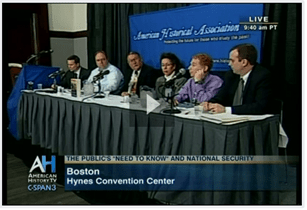
d)      Open Secrets: The Foreign Relations of the United States Series, Democracy’s ‘Need to Know,’ and National Security: American Historical Association Panel,  January, 9,  2011.

To hear how the FRUS editors sort through questions such as how much the public needs to know, what should be kept secret, are secrets political, and how long secrecy lasts, watch this fascinating panel discussion on how a democracy balances the public’s right to know against the need for preserving national security. This panel was held on January 9, 2011 at the American Historical Association Annual Meeting and included a roundtable of historians from the State Department and National Security Archive. The panel discussion can be viewed on CSPAN video or Youtube video.

Figure: FRUS panel entitled “Open Secrets: The Foreign Relations of the United States Series, Democracy’s ‘Need to Know,’ and National Security” at the American Historical Association Annual Meeting on January 9, 2011.


So from one 150 year-old to another, GPO wishes the Foreign Relations of the United States series a very well-deserved happy birthday!

How can you get copies of the Foreign Relations of the United States (FRUS) series?

Alerts about new releases of the Foreign Relations of the United States series

1) GPO Email Alerts:  Sign up to receive email alerts from the U.S. Government Bookstore about new publications in the FRUS series.

2) State Department FRUS RSS feed:  You can also keep up-to-date about new releases in the FRUS series by subscribing to the State Department’s FRUS Series RSS feed.

About the Author:  Michele Bartram is Promotions Manager for GPO’s Publication and Information Sales Division and is responsible for online and offline marketing of the US Government Online Bookstore (Bookstore.gpo.gov) and promoting Federal government content to the public.